Photo archive
Cafe Gitane in photographs
The rooms, the counter, the plates and the details — preserved from the cafe's own site after it went offline.
These are the restaurant's own photographs, kept here as part of a historical record with captions describing what they show. Copyright remains with the original photographers and with Cafe Gitane. Click any image to enlarge it, then use the arrow keys. If you hold rights in an image and want it credited differently or removed, please get in touch.
242 Mott Street, Nolita · closed 2025
The Nolita room
The original cafe: the counter, the banquettes, the ochre walls, and the food that came out of a very small kitchen for thirty-one years.
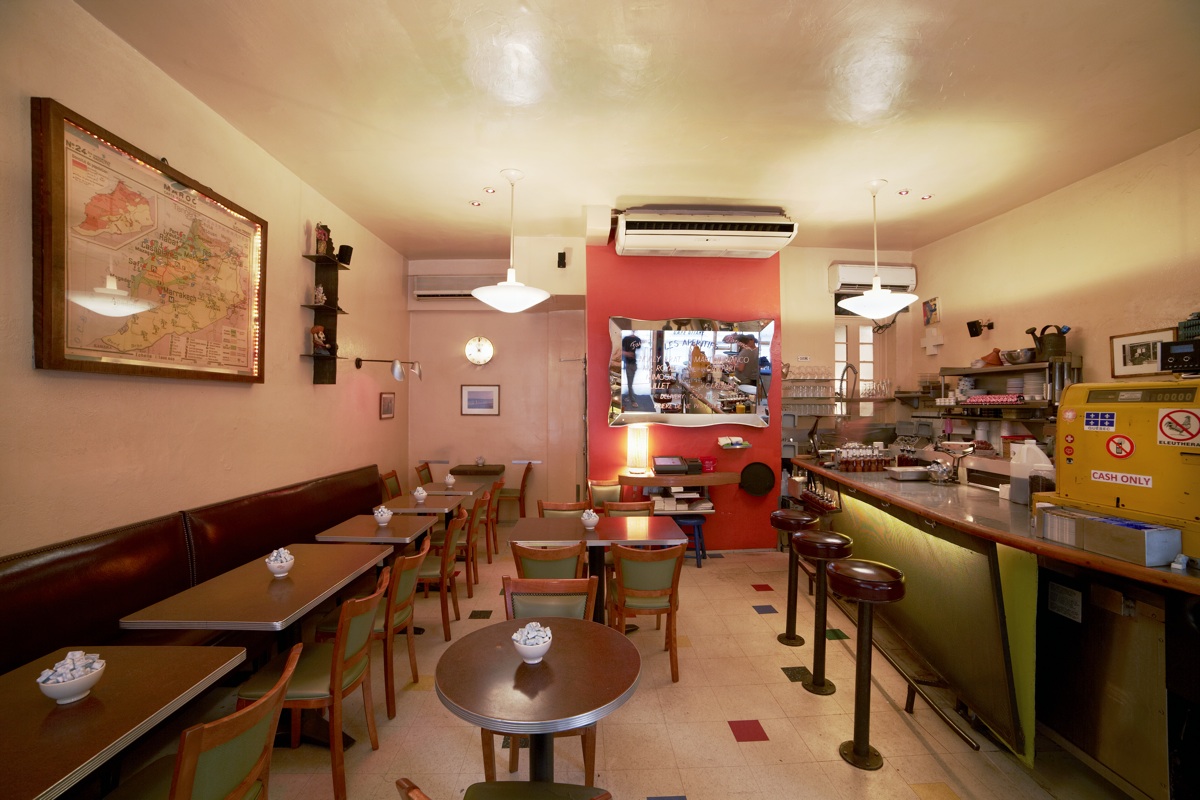 The Mott Street room: banquettes down one side, the counter down the other, a framed map, and the red service hatch through to the kitchen.
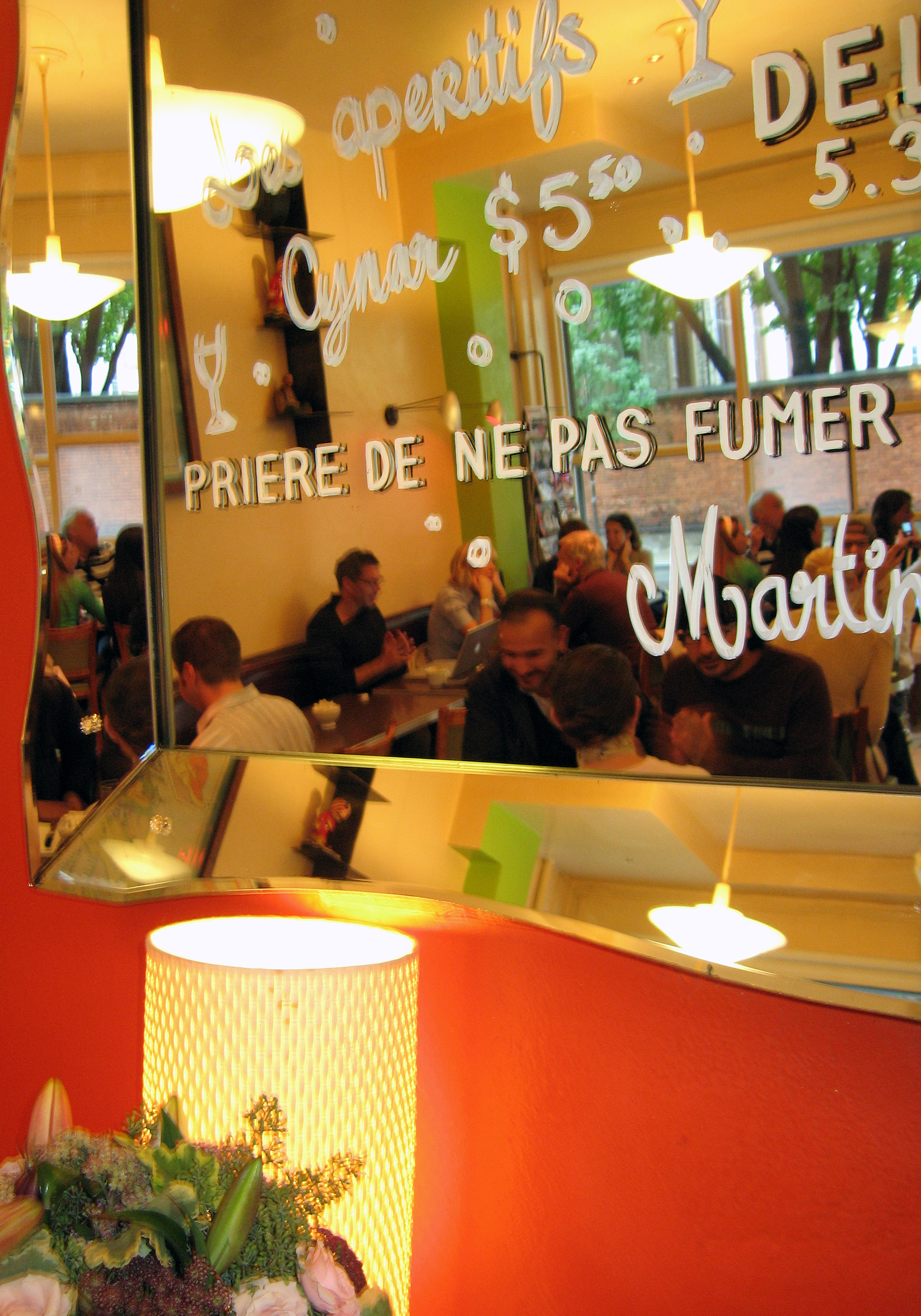 A full house under the hand-painted ‘prière de ne pas fumer’ lettering on the window.
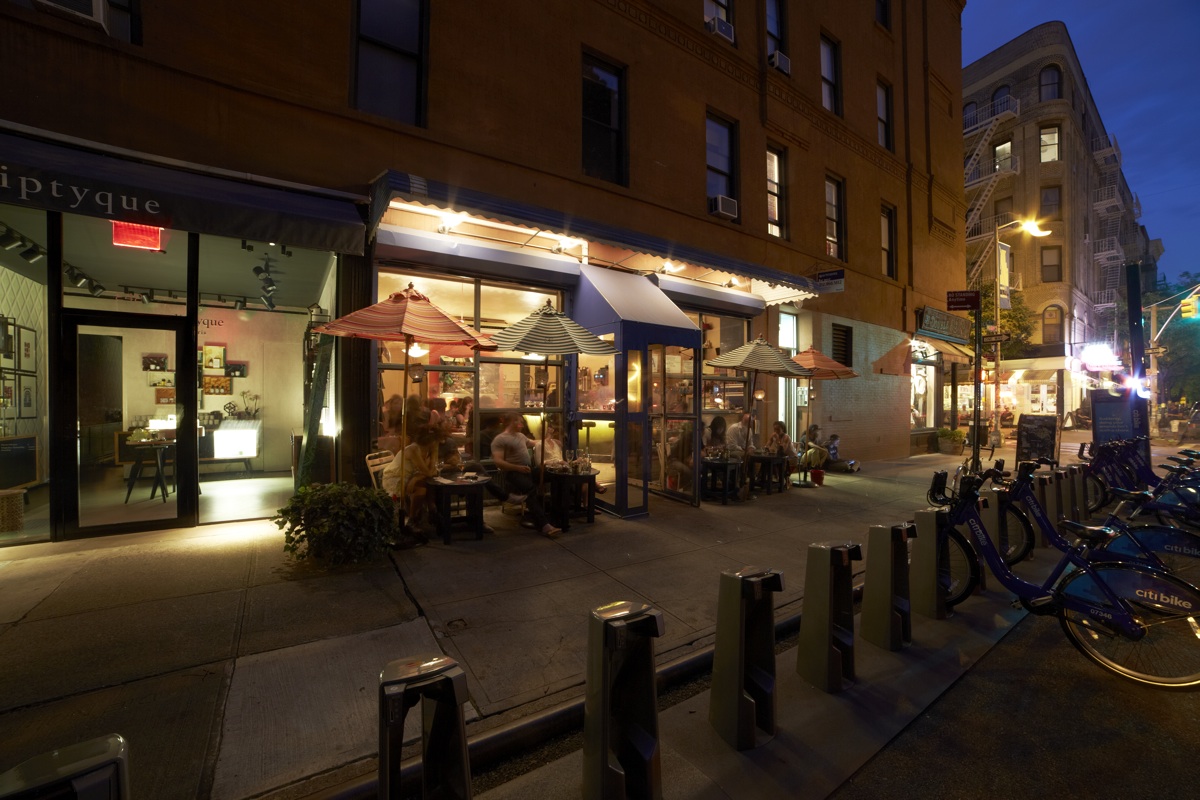 Mott Street at dusk. For most of thirty years this was the block people meant when they said they would meet you downtown.
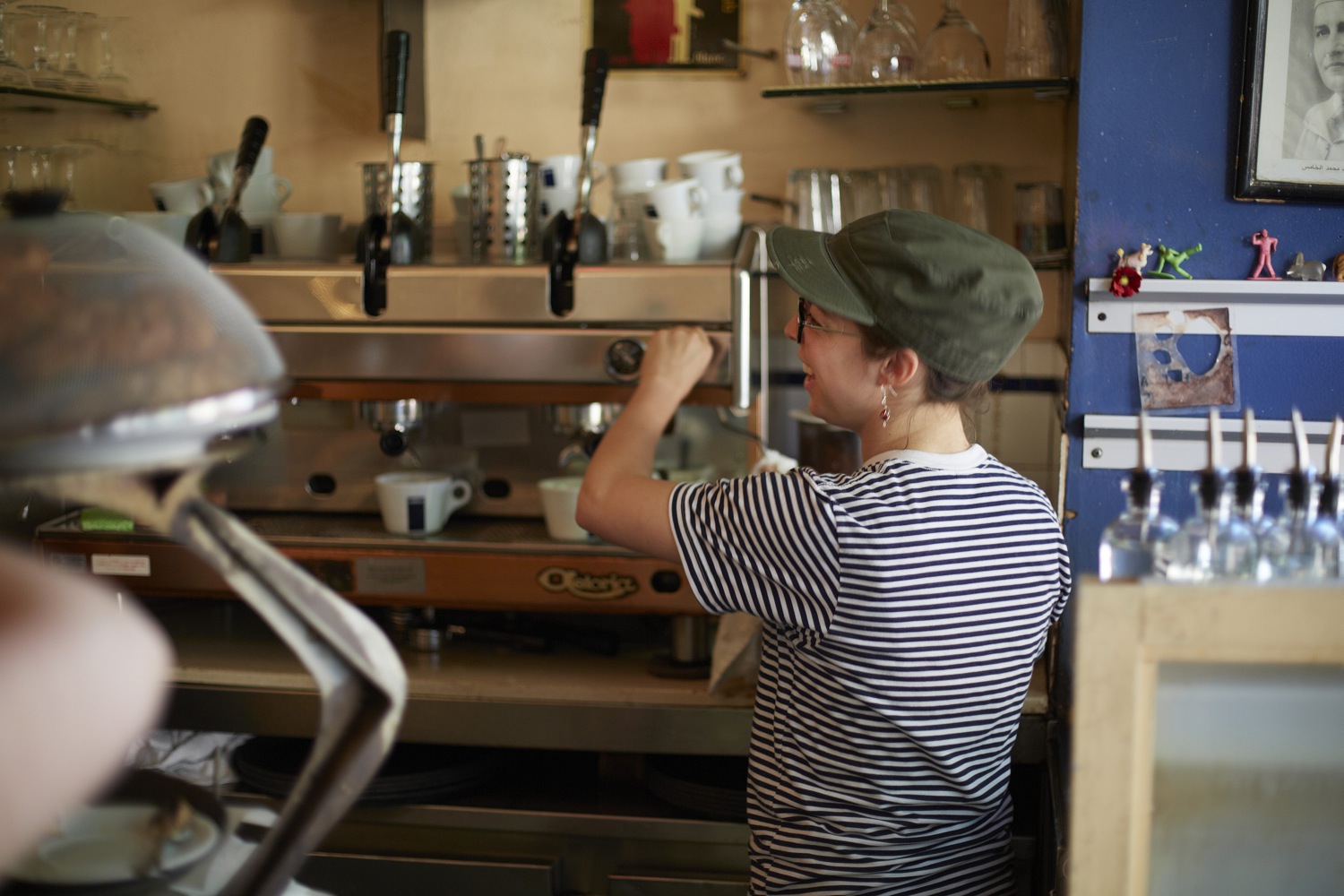 Behind the counter at 242 Mott Street.
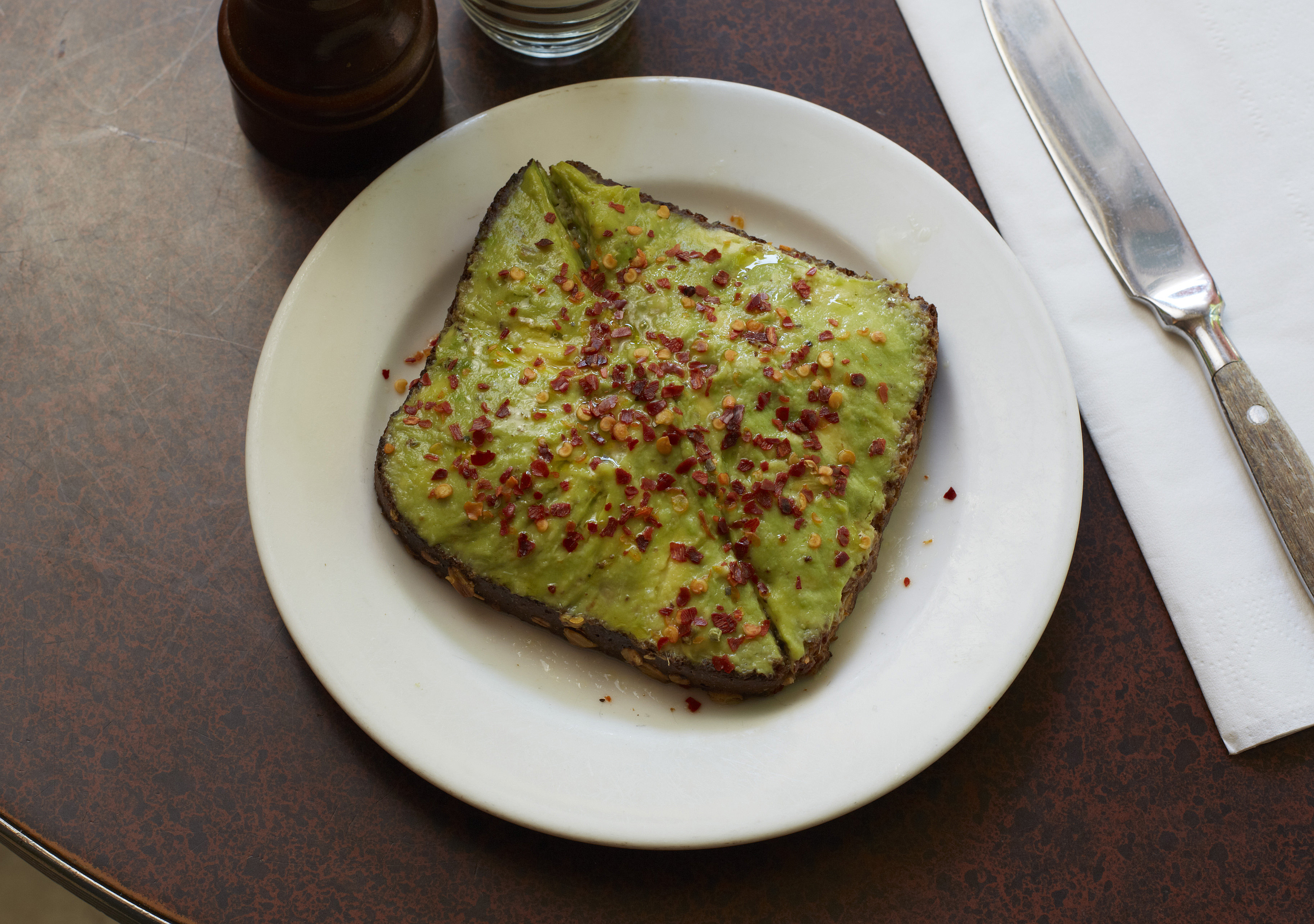 The avocado toast — mashed avocado, lemon and red chilli flakes on grilled bread. Widely reported as the first served in New York.
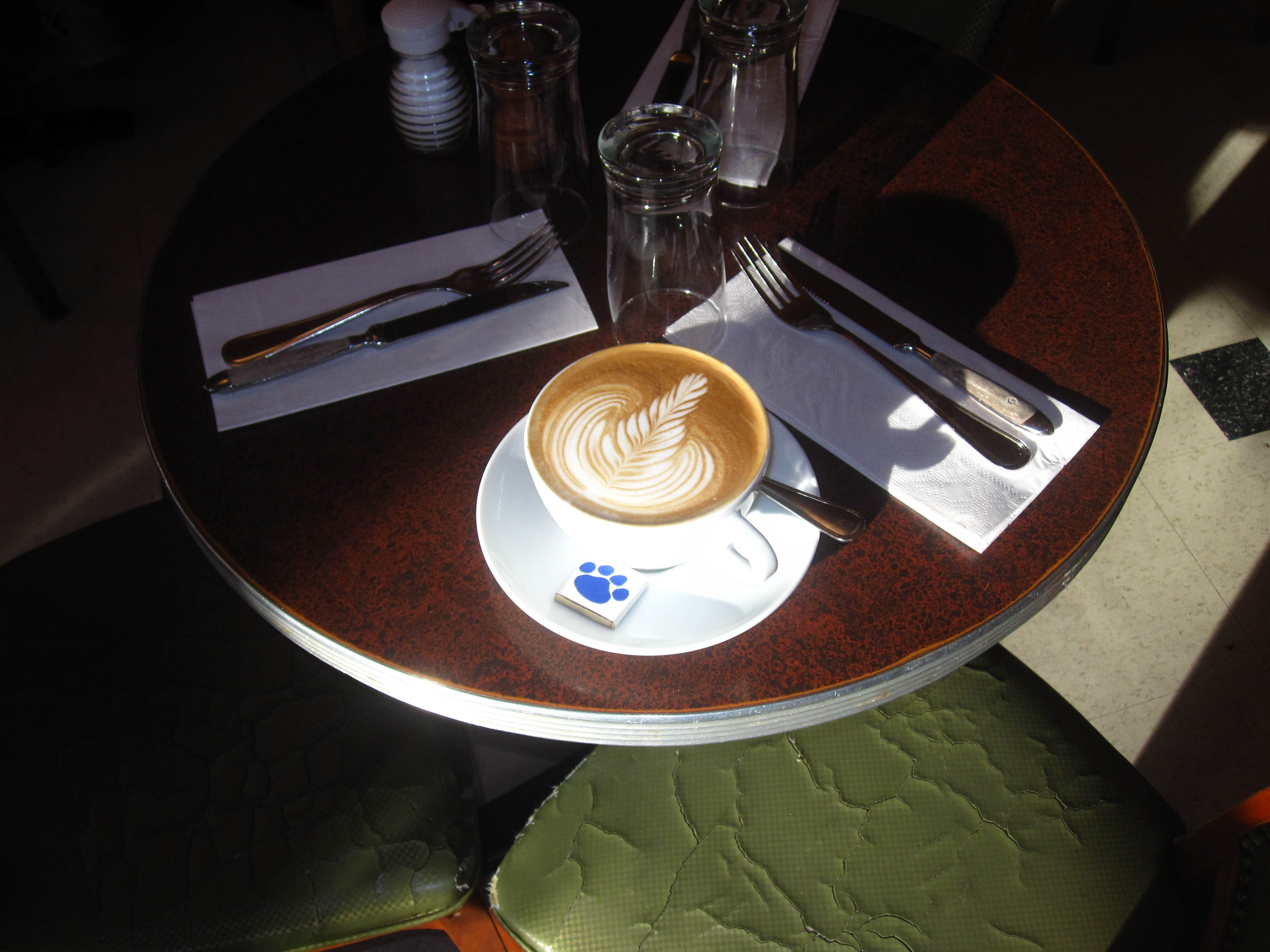 Cappuccino at a window table beside the green banquette, 2020.
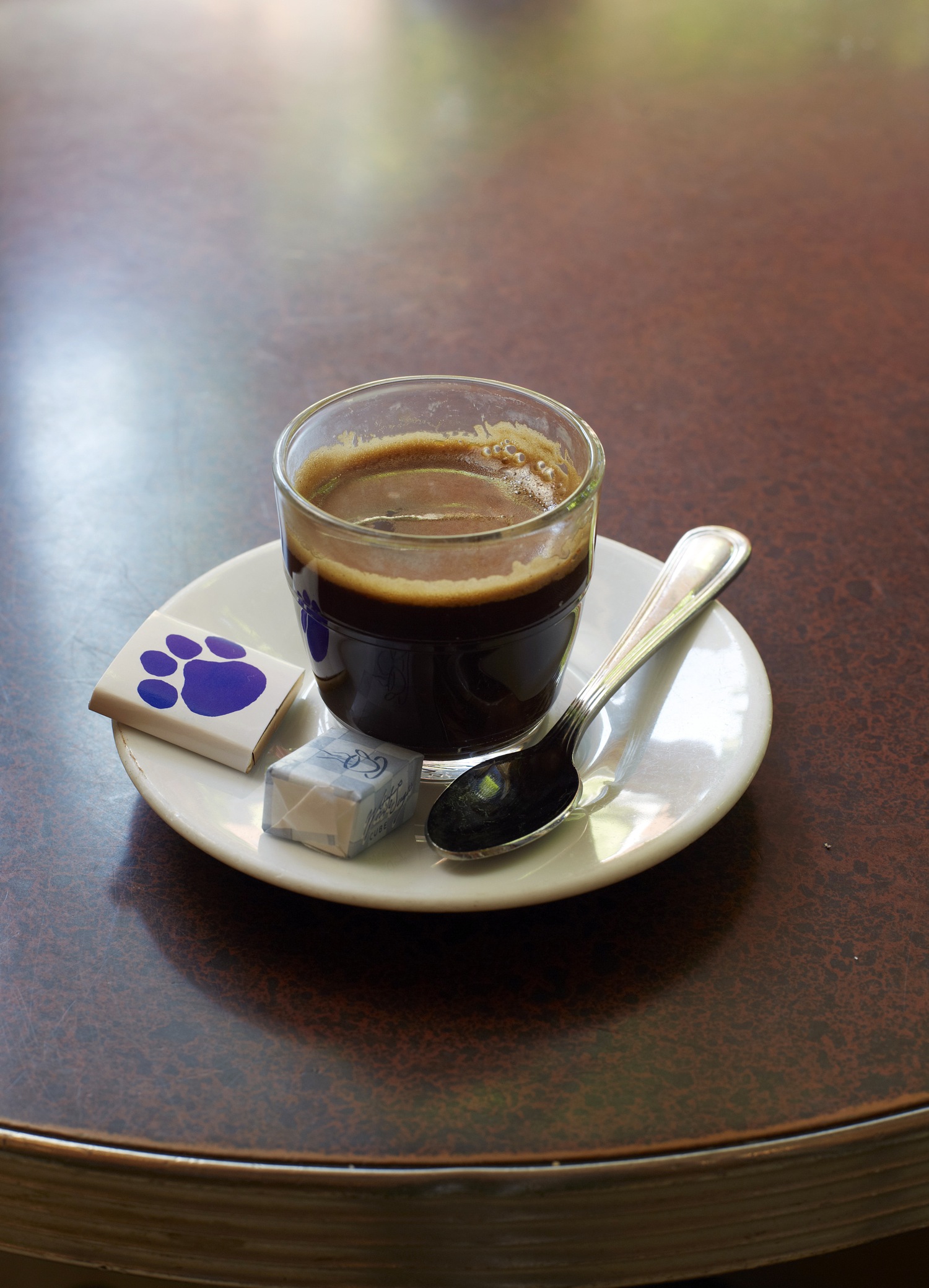 Espresso on one of the dark round tables that filled the room.
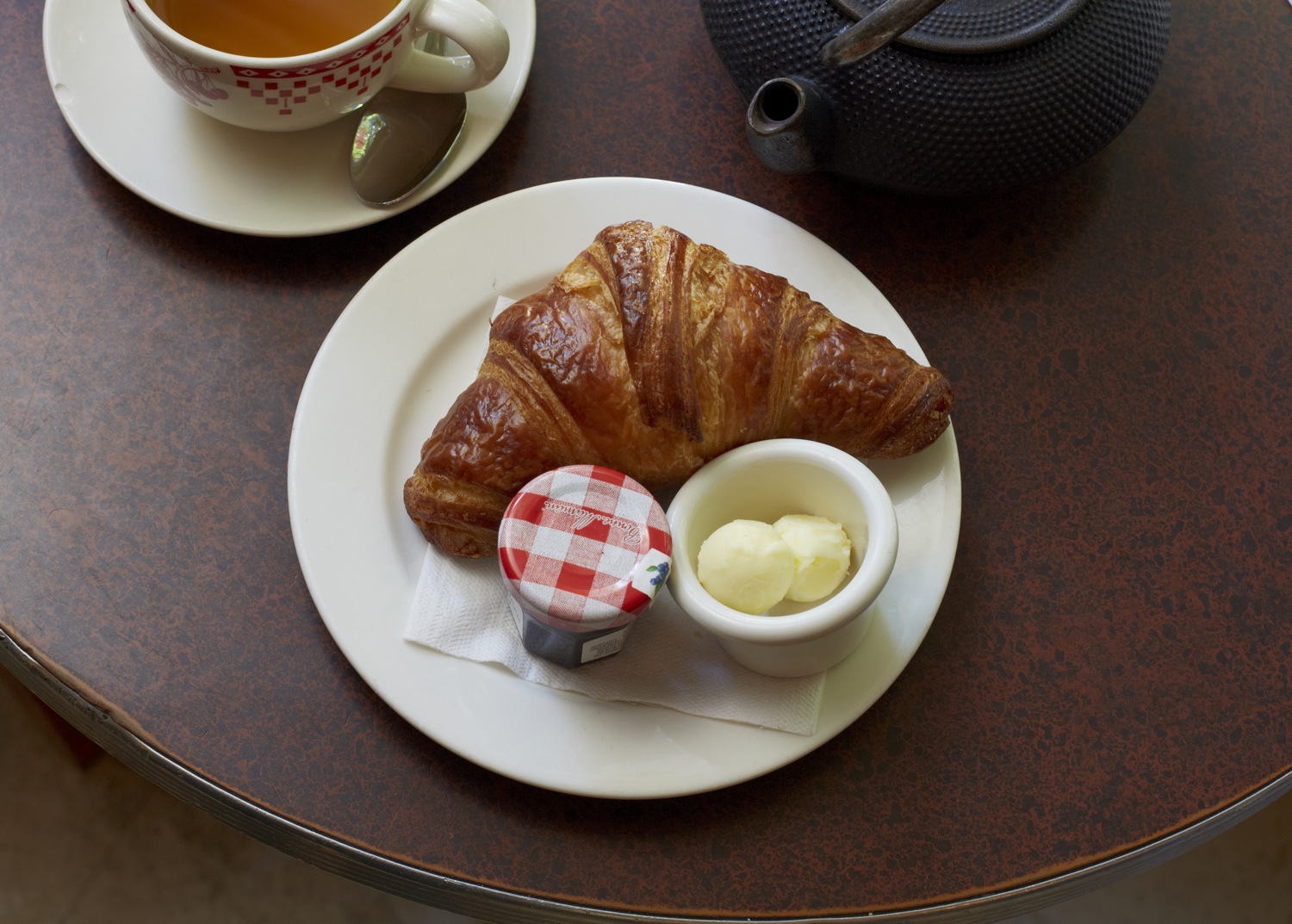 Croissant, butter and jam — the French half of the kitchen, before noon.
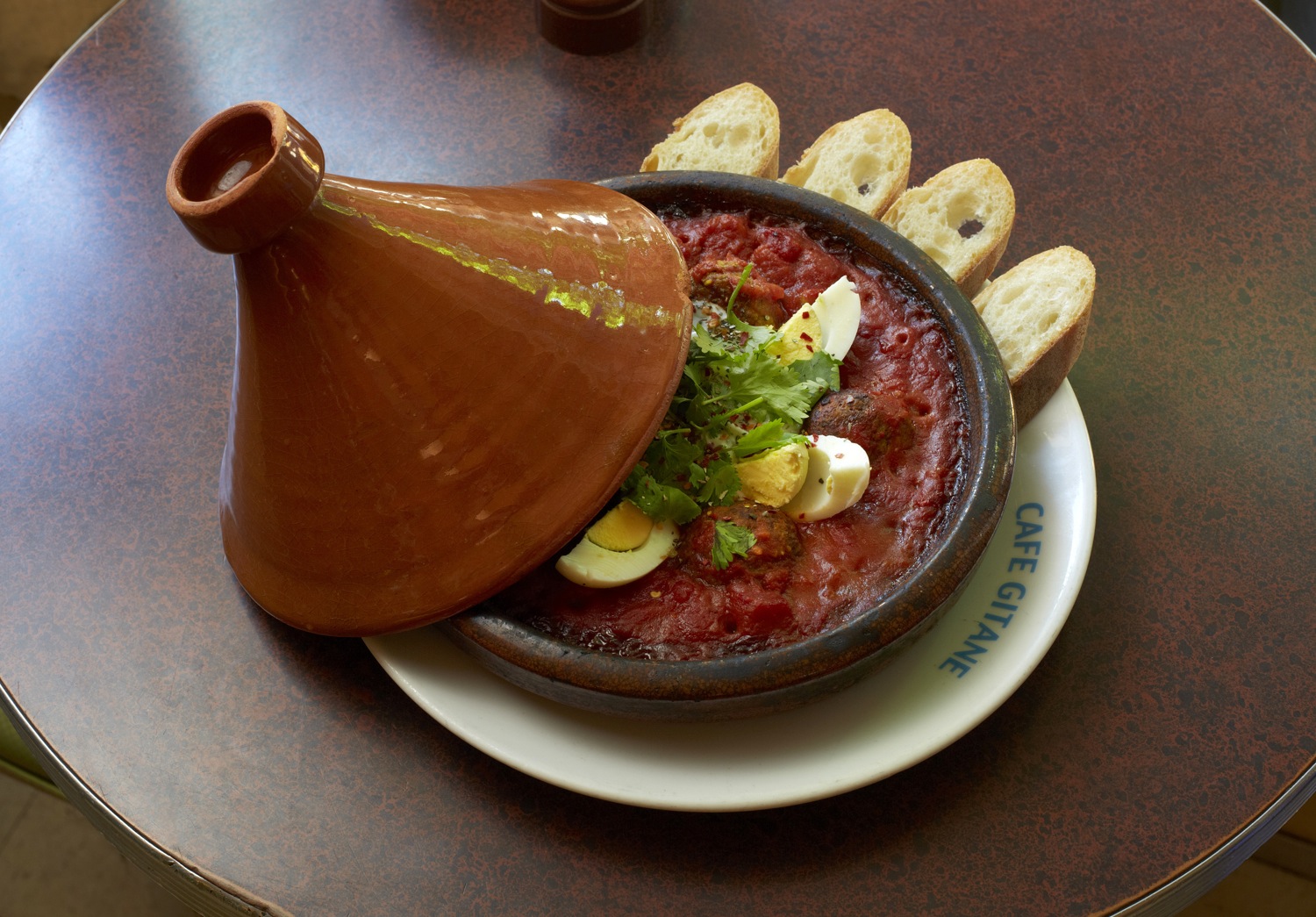 A terracotta tagine served with toasted baguette on the blue-rimmed house china.
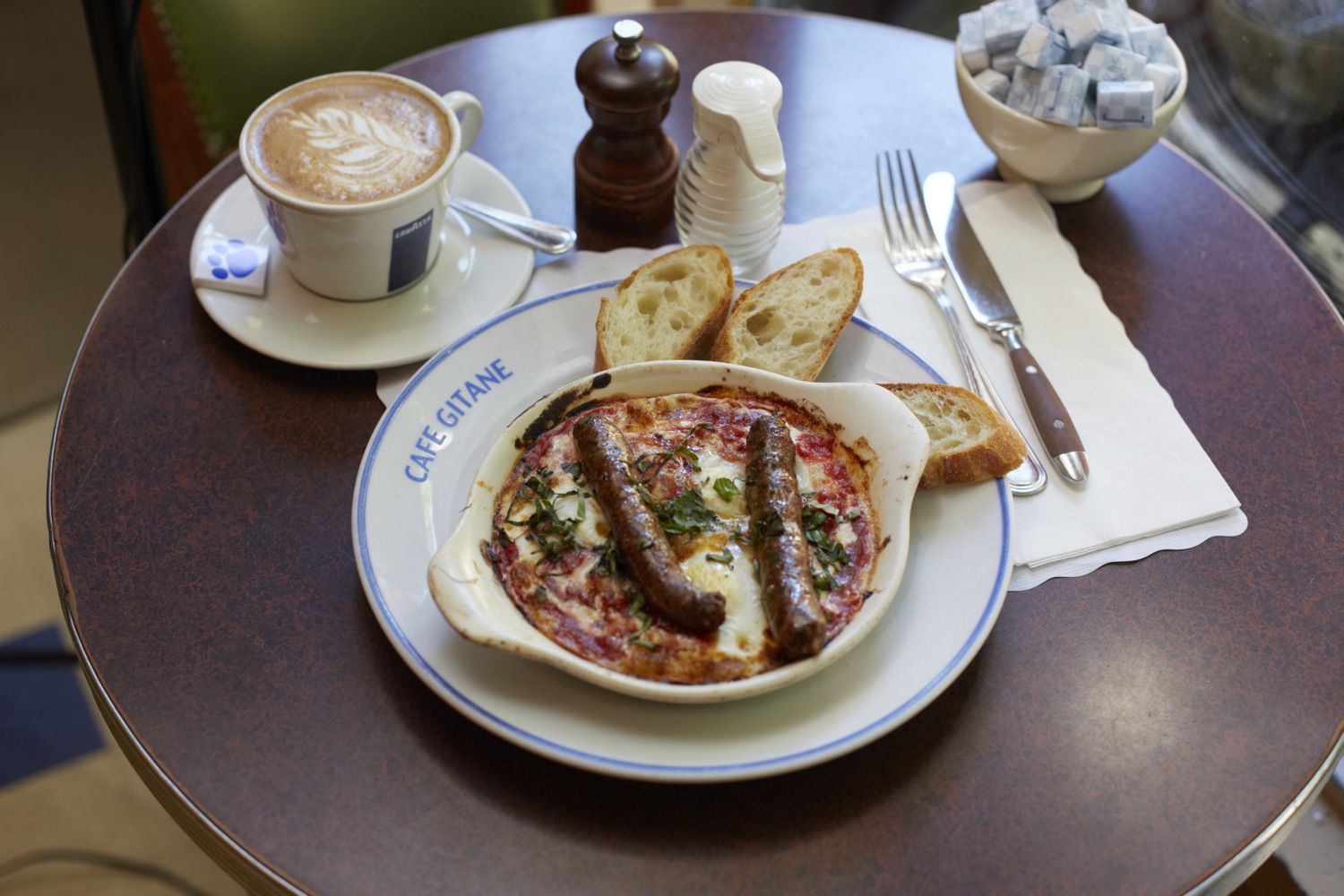 Merguez on a spiced base with bread, and a cappuccino alongside — the cafe ran the full menu at any hour.
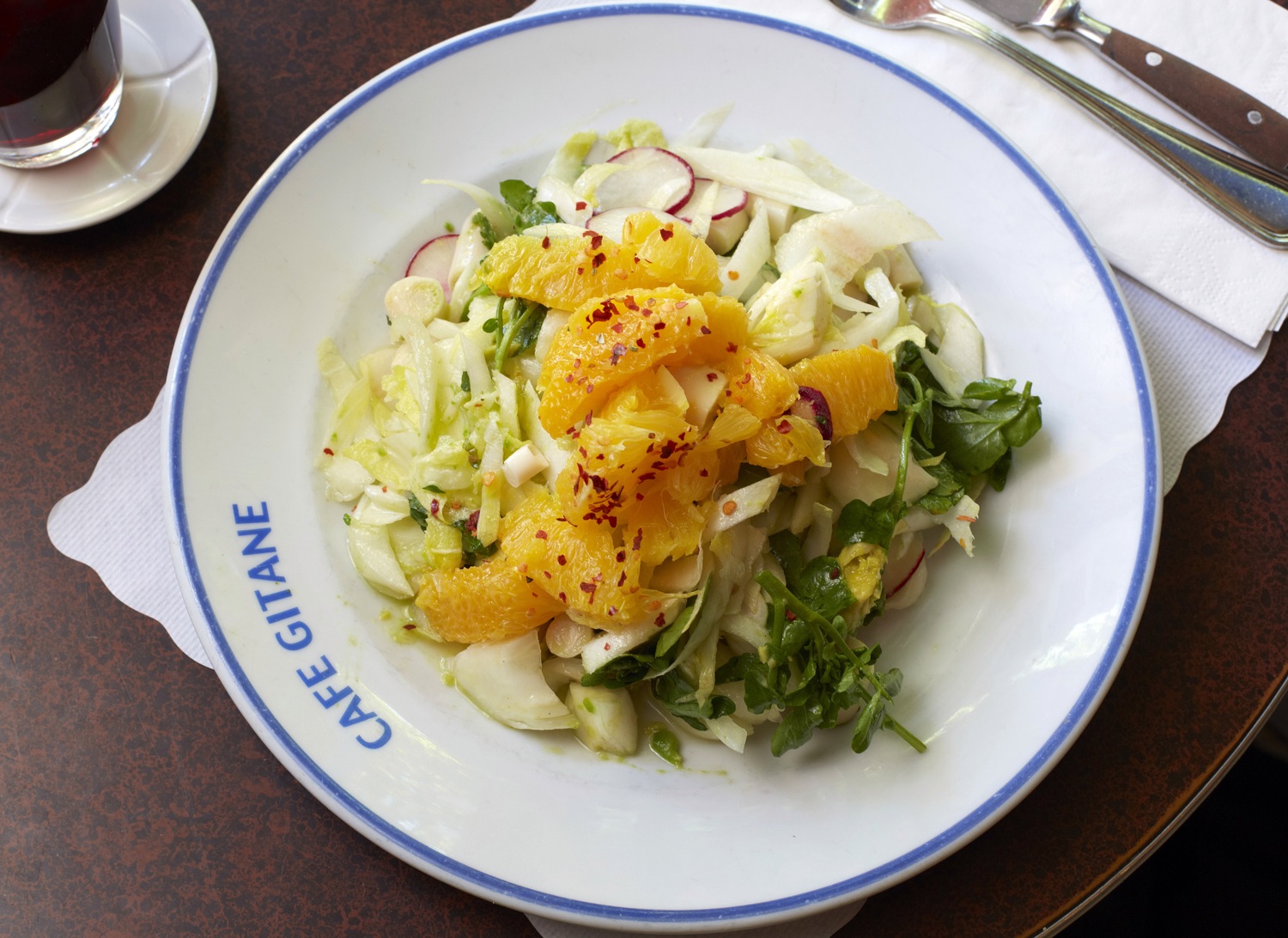 Orange segments with greens and olive oil — the Casablanca side of the menu, served cold and sharp.
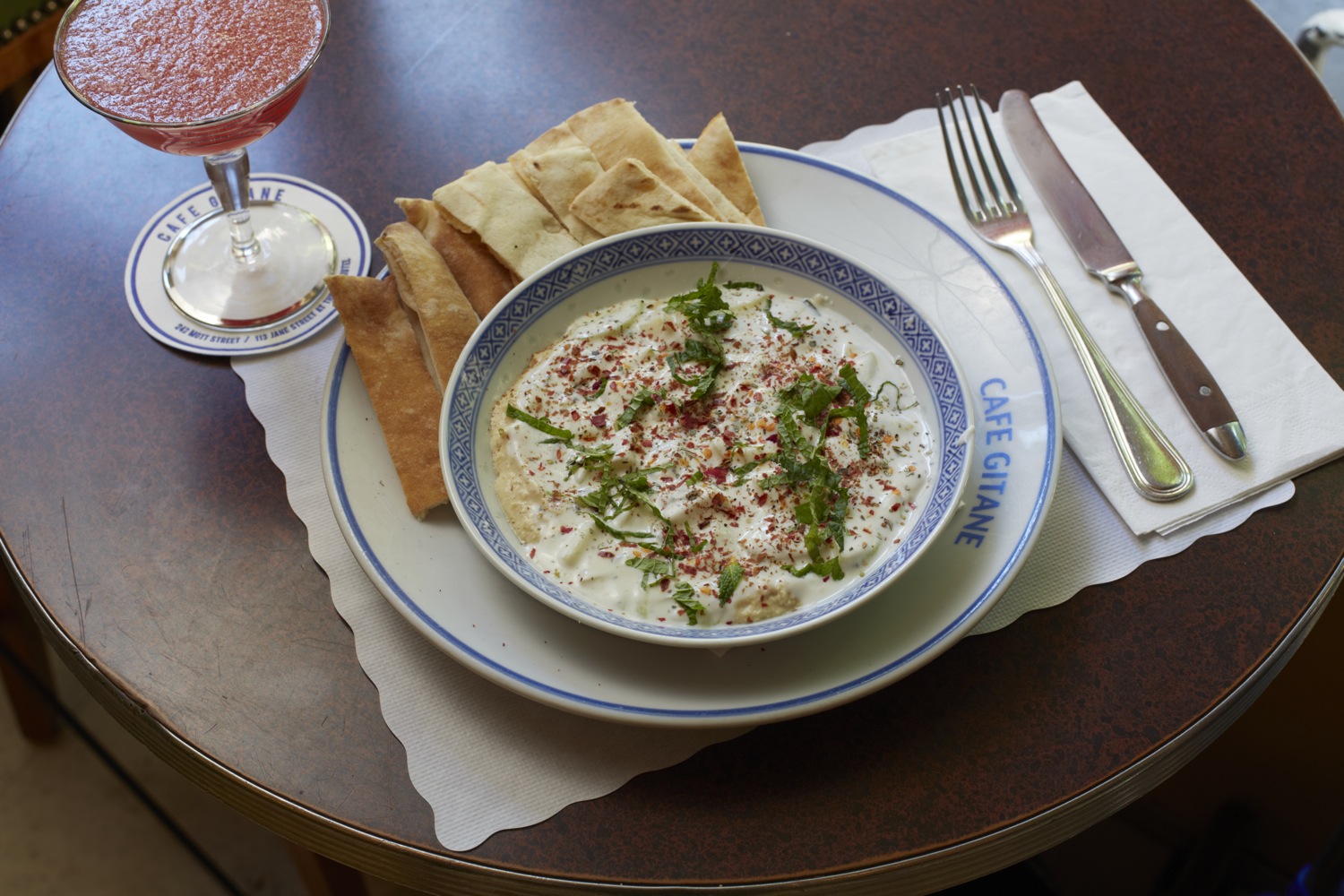 A herbed dip with flatbread, and something cold to go with it.
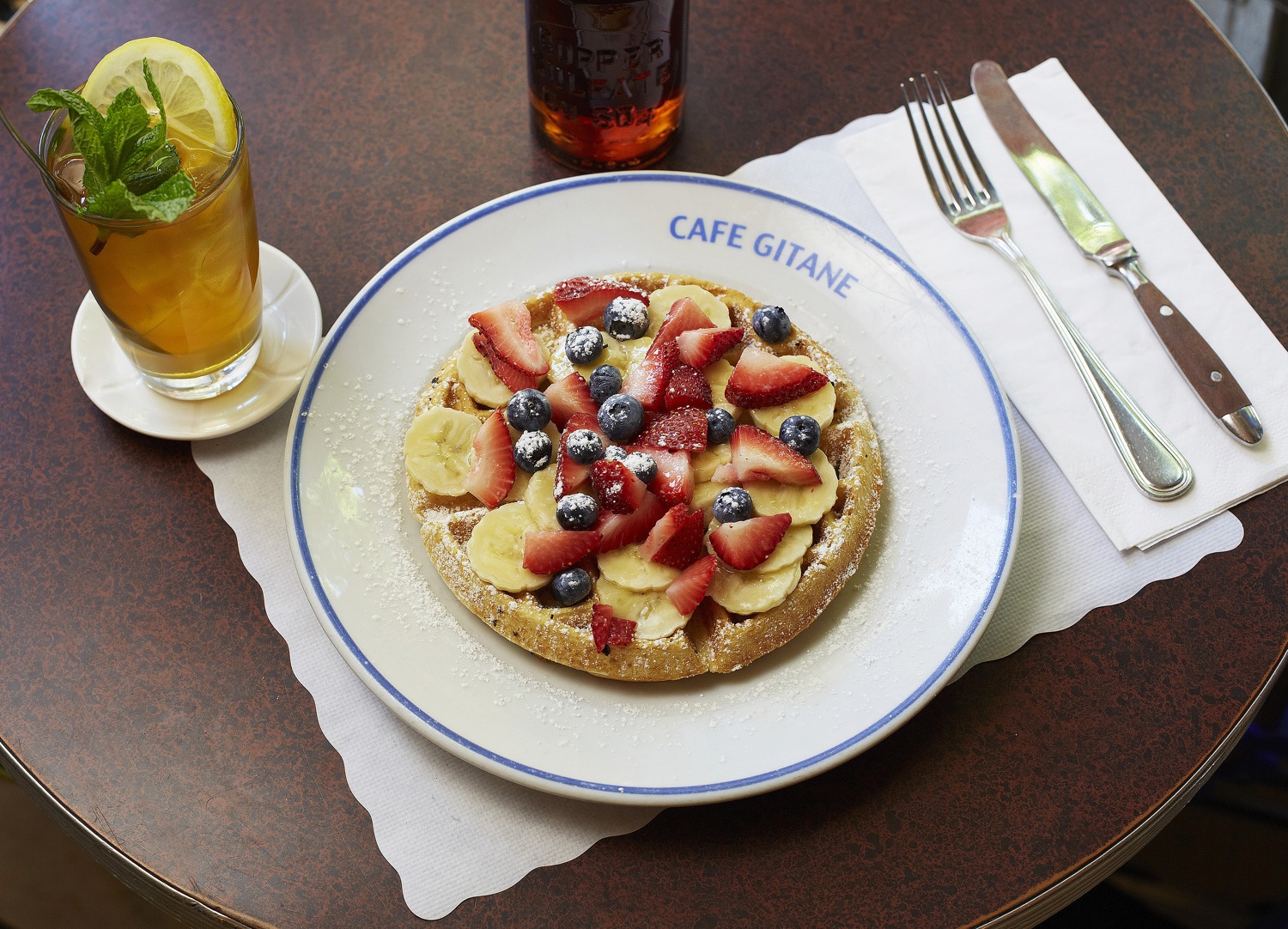 A fruit tart from the pastry counter, on the house china.
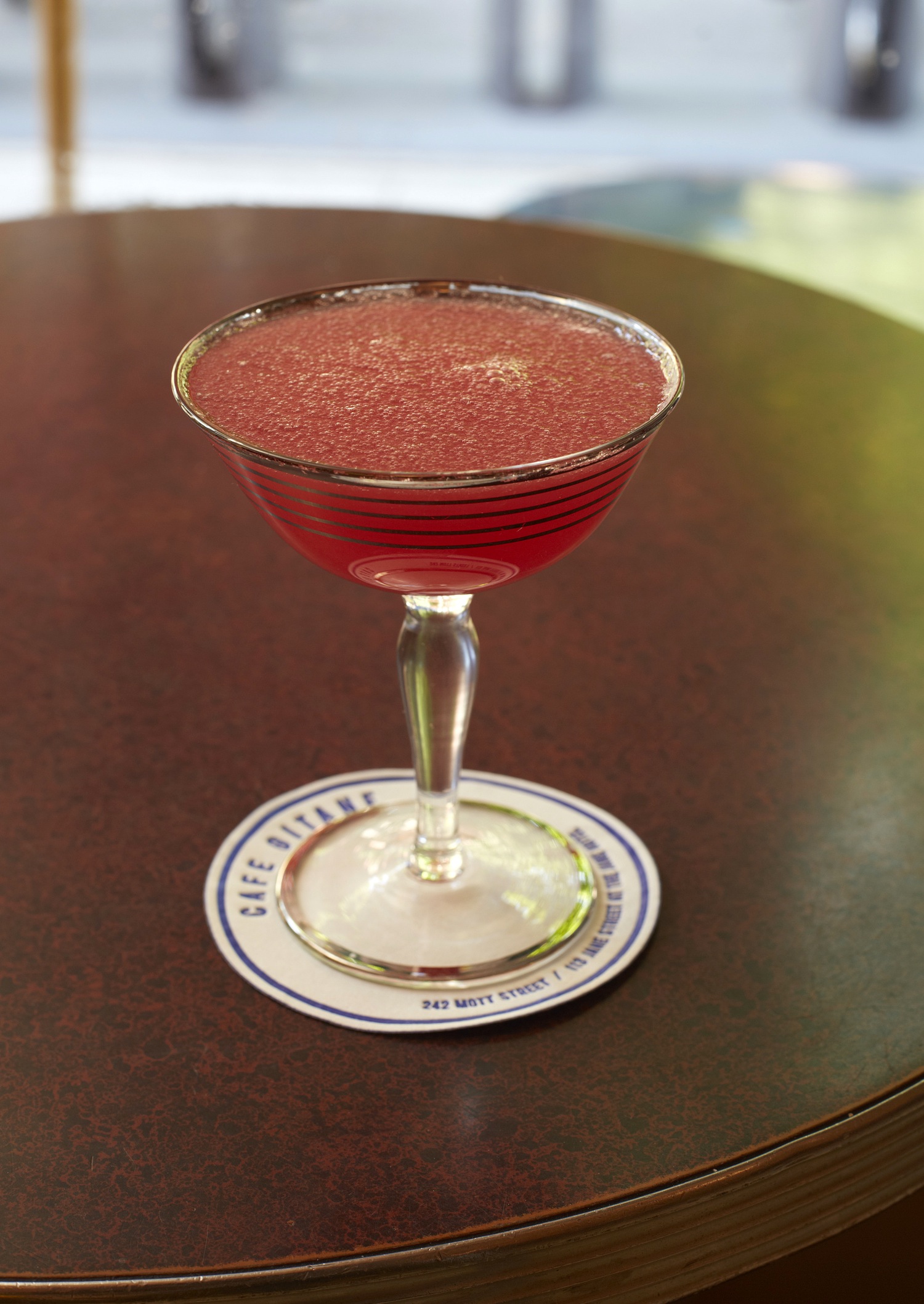 A cocktail at the counter, when the room turned over to the evening.
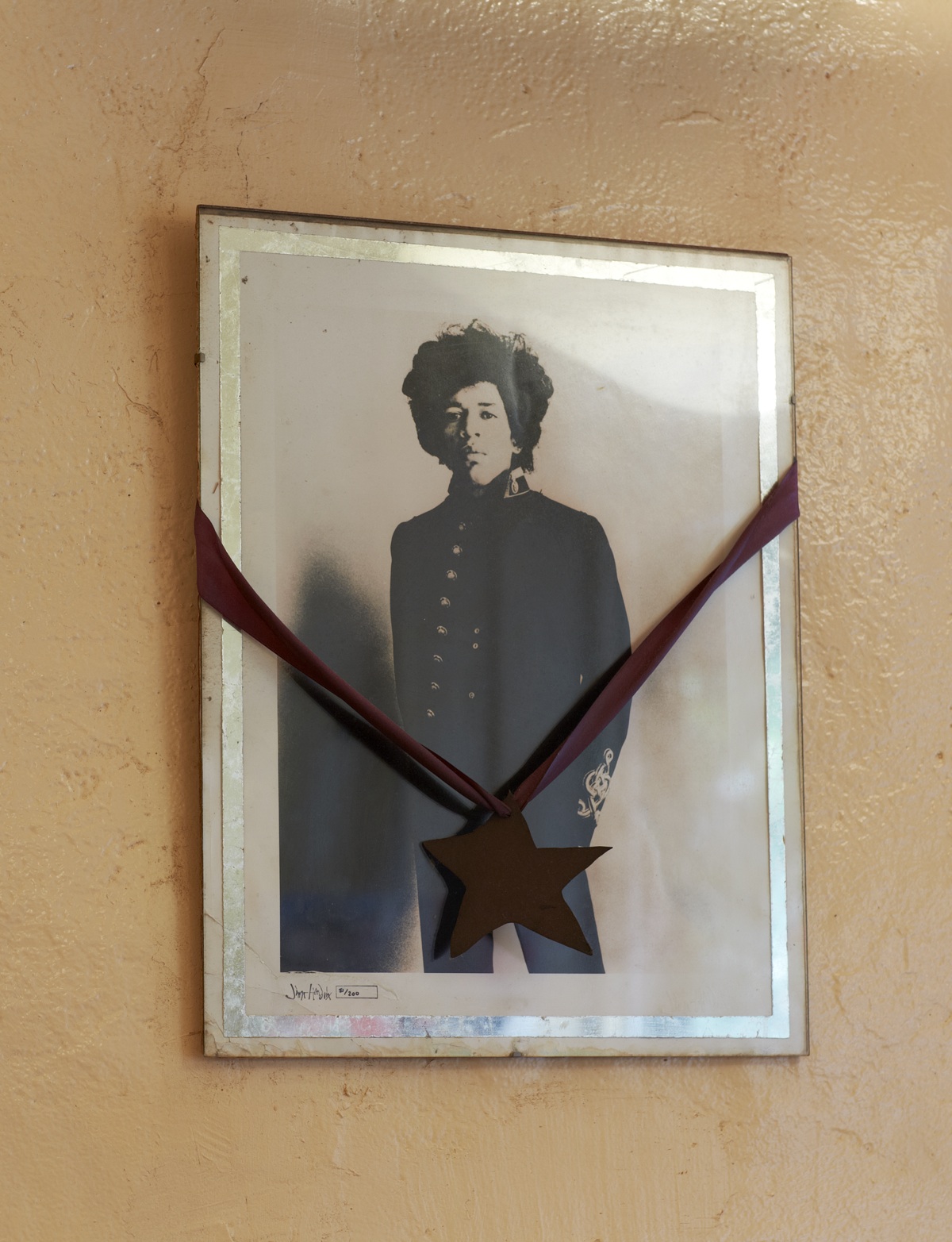 One of the framed pictures that hung on the Mott Street walls, arranged to no particular scheme.
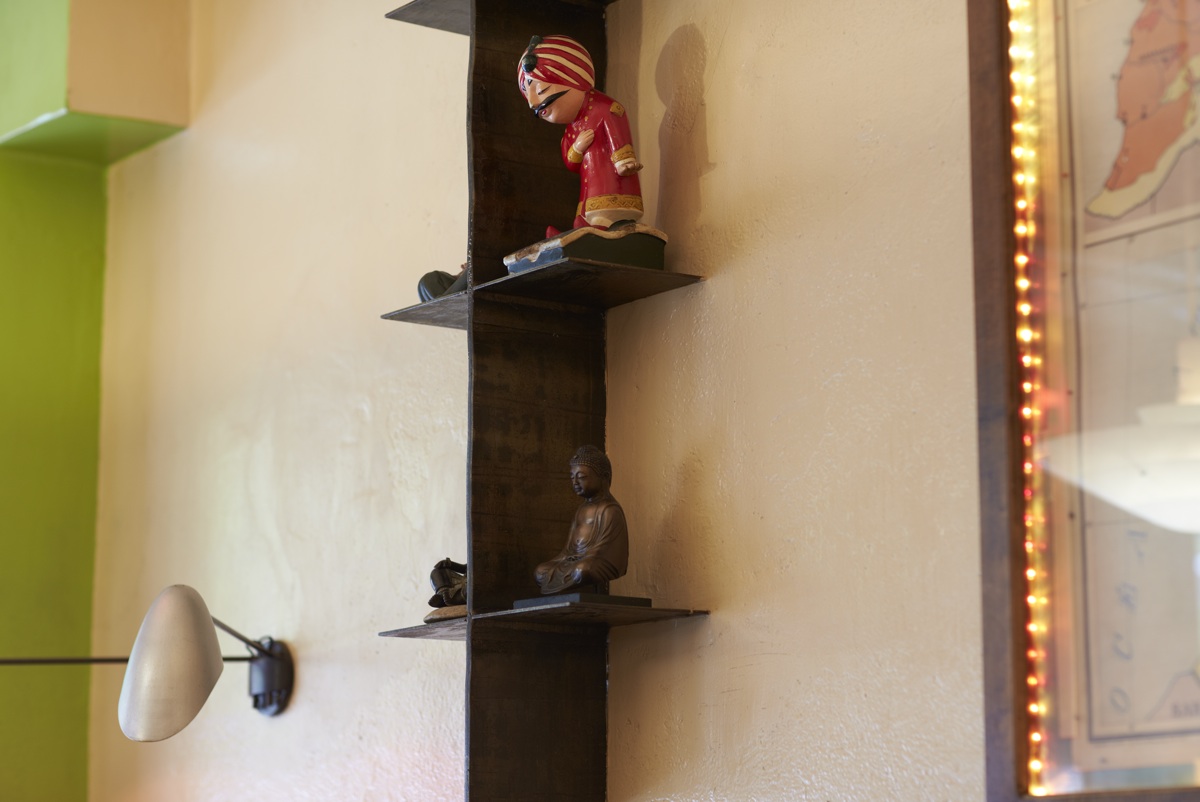 A shelf of small figures against the pale green back wall — decoration assembled by instinct rather than plan.
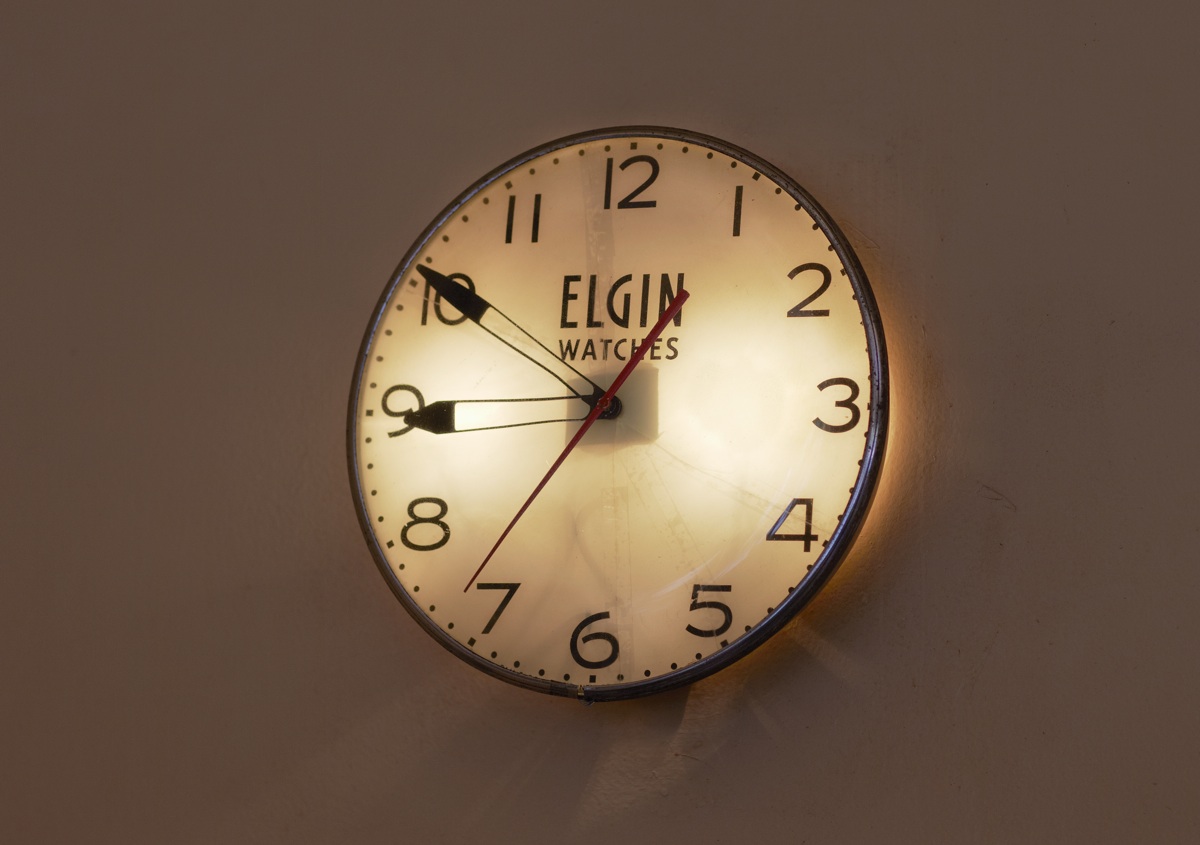 The Elgin clock on the cafe wall — one of the fittings that never moved in thirty-one years.
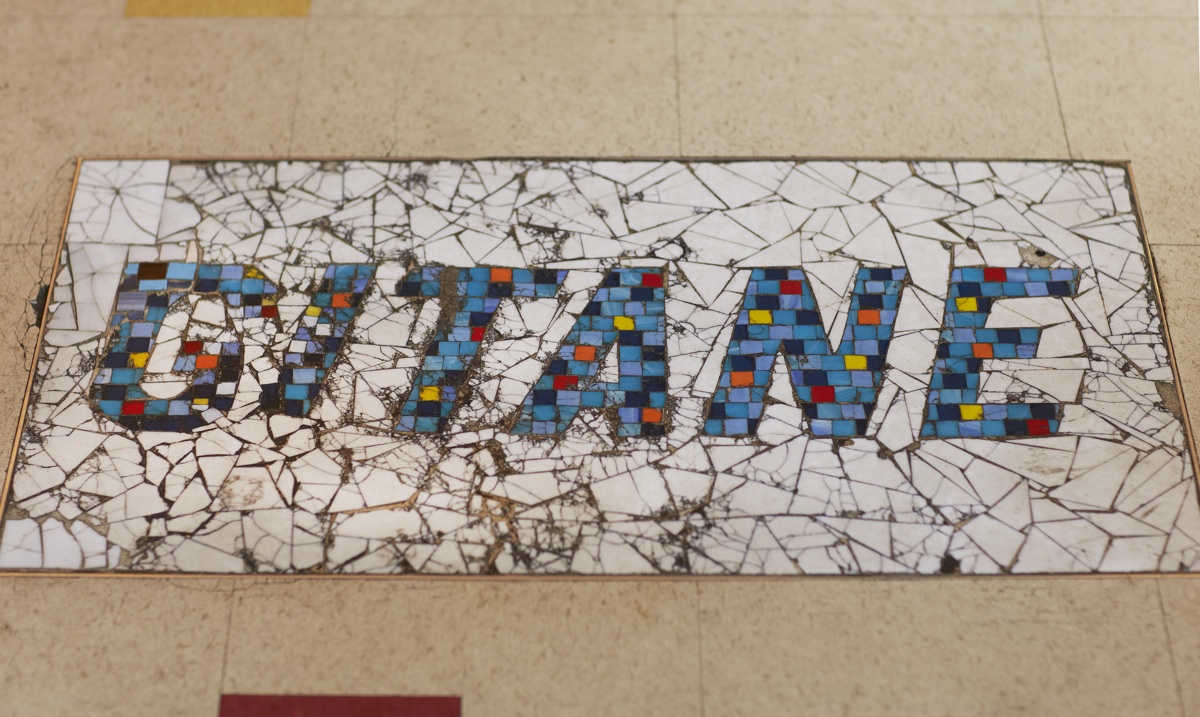 The mosaic threshold spelling out GITANE, set into the floor at the door.
113 Jane Street, West Village · closed
The Jane Hotel outpost
The West Village location ran the same menu in a far more theatrical room — checkerboard tile, arched windows, gilded banquettes and salvaged fittings.
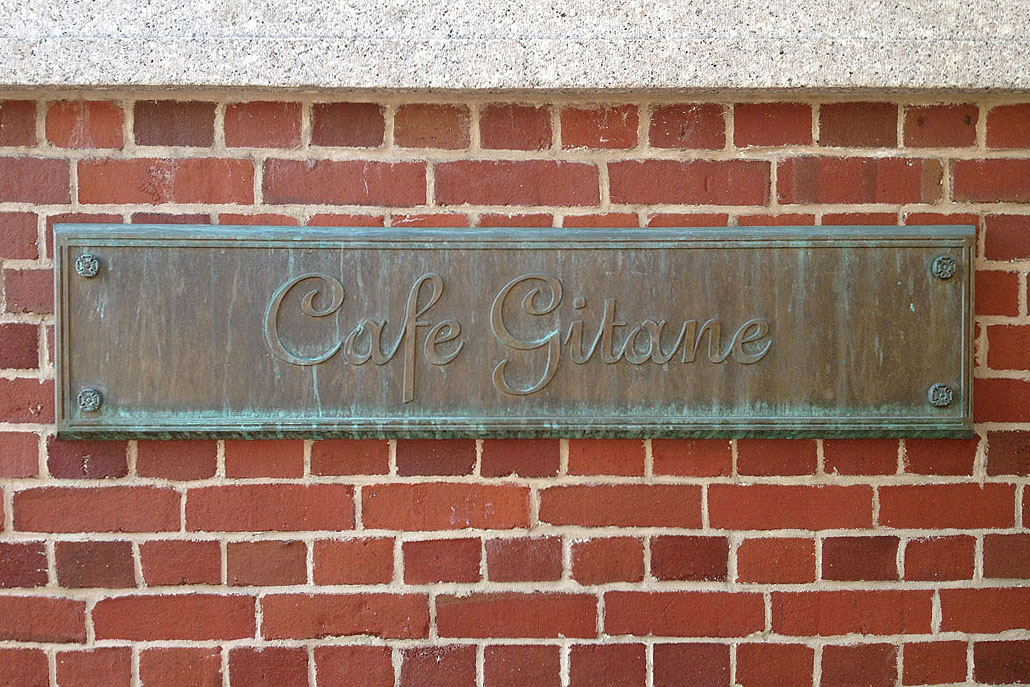 The brass plaque on the brick at 113 Jane Street.
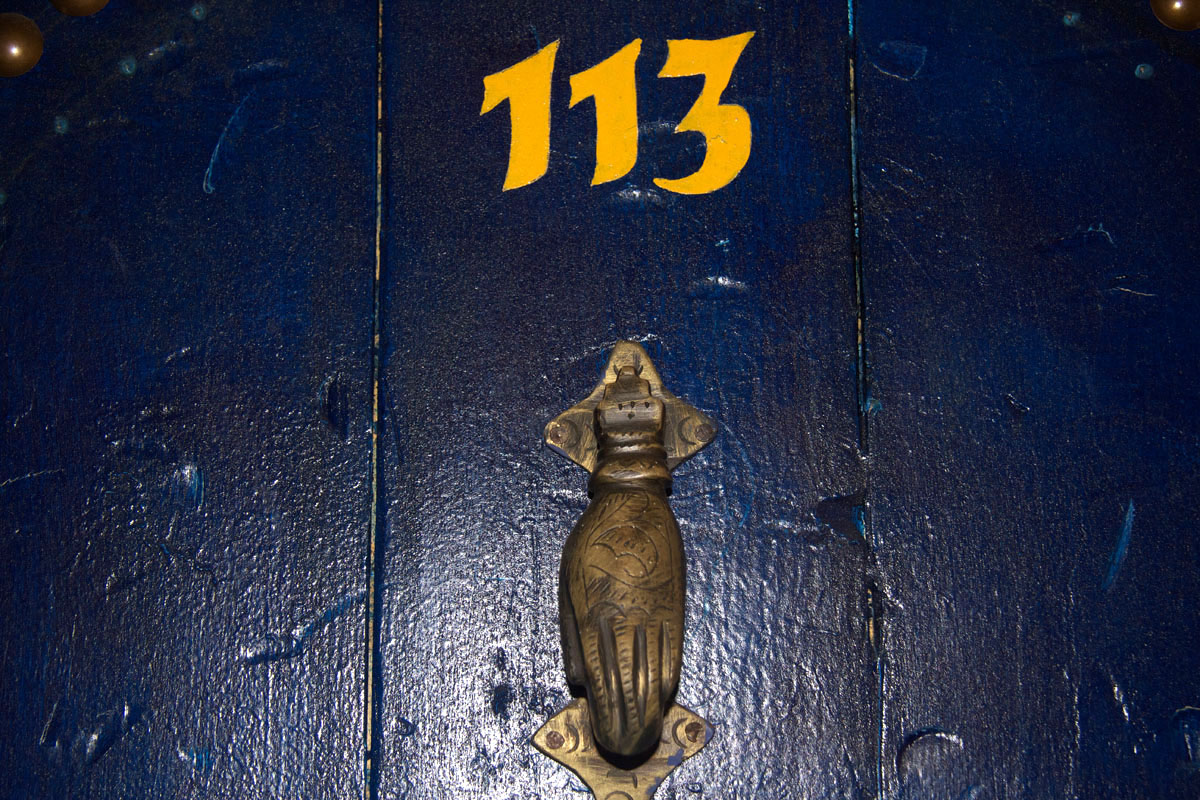 The blue door at 113 Jane Street, with its figural knocker.
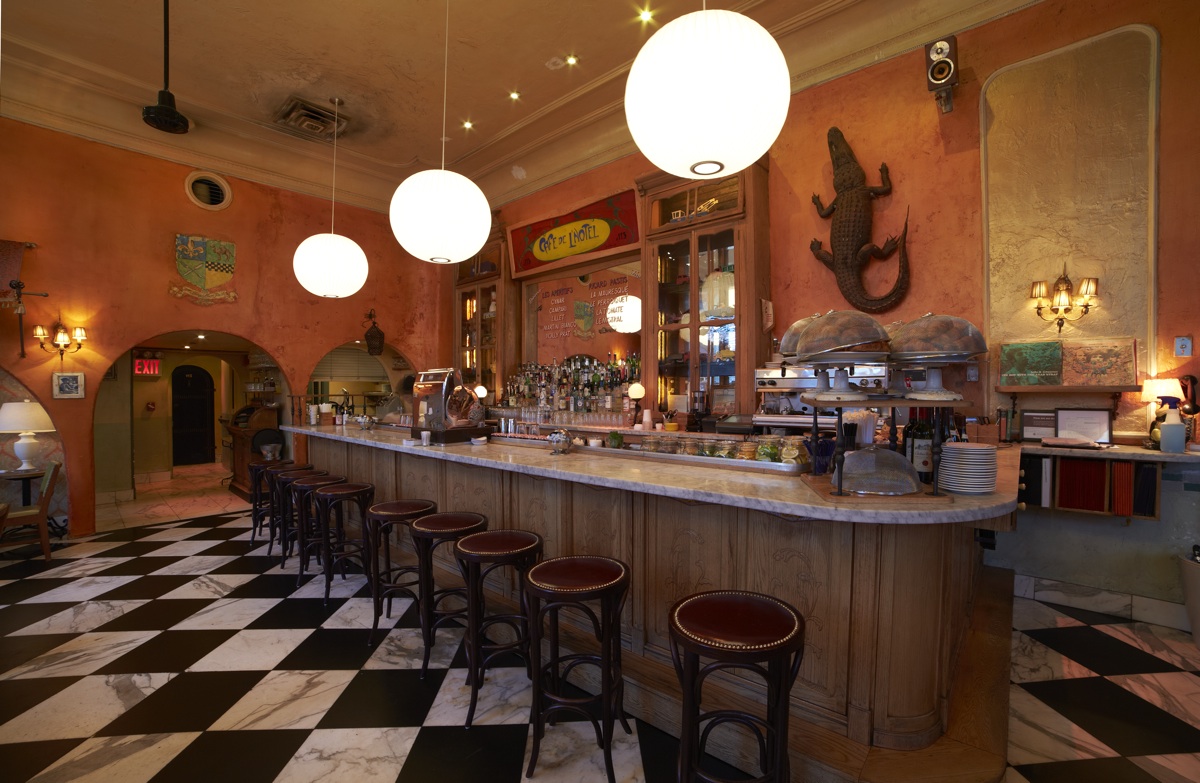 The curved counter and the checkerboard floor — a considerably grander room than the Nolita original.
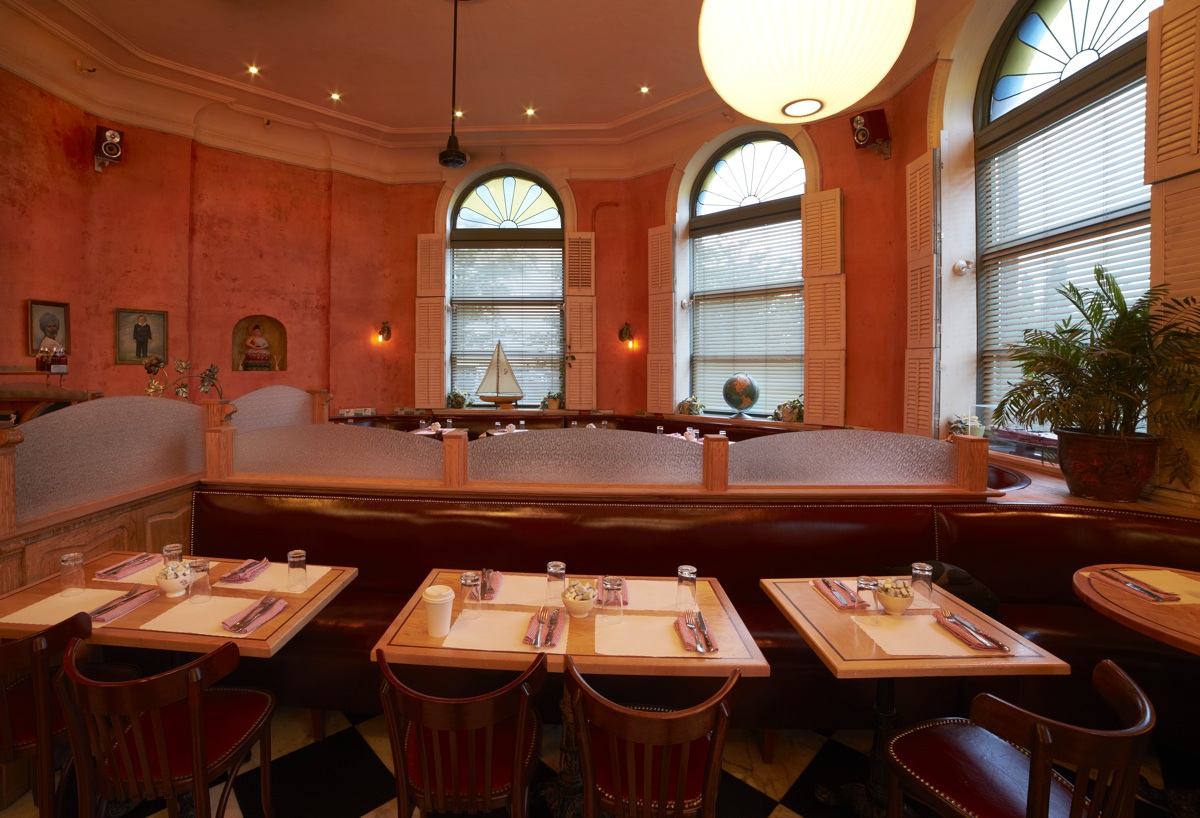 Banquettes and set tables under the arched windows.
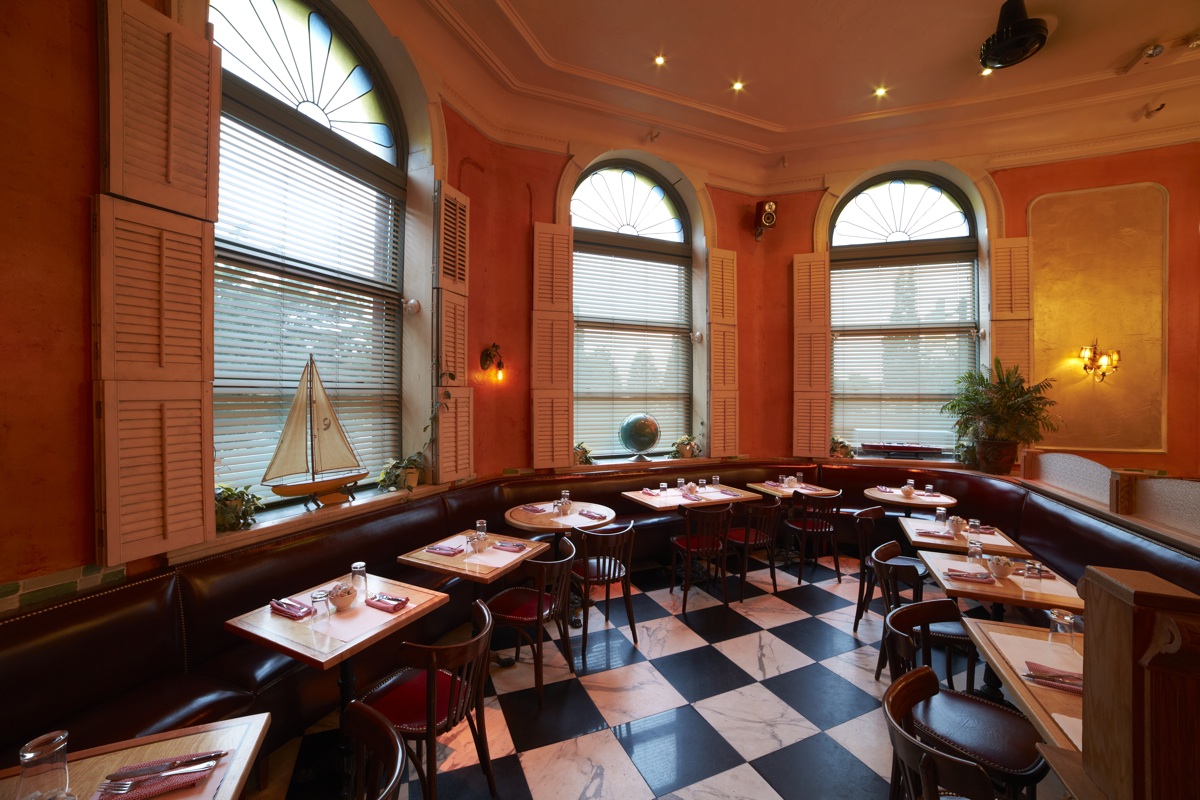 The dining room at the Jane, looking towards the windows.
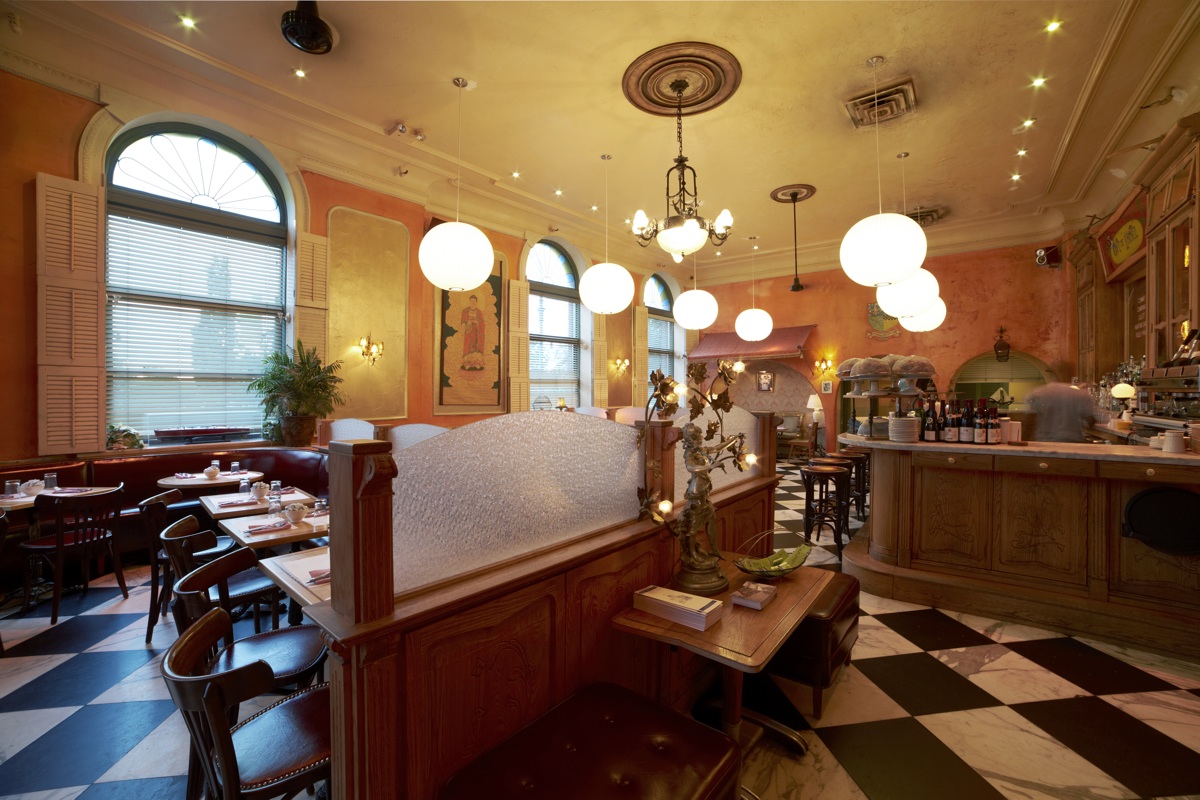 Globe pendants and a chandelier over the checkerboard floor.
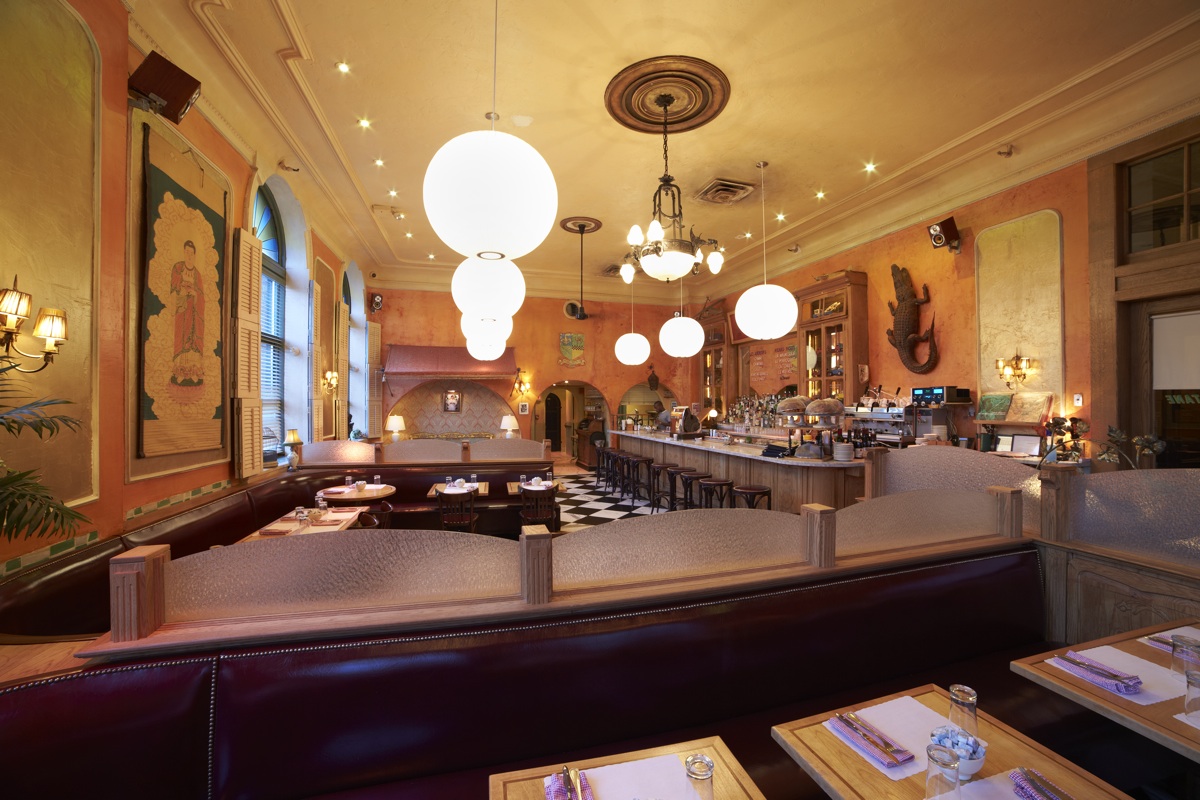 The length of the room at 113 Jane Street.
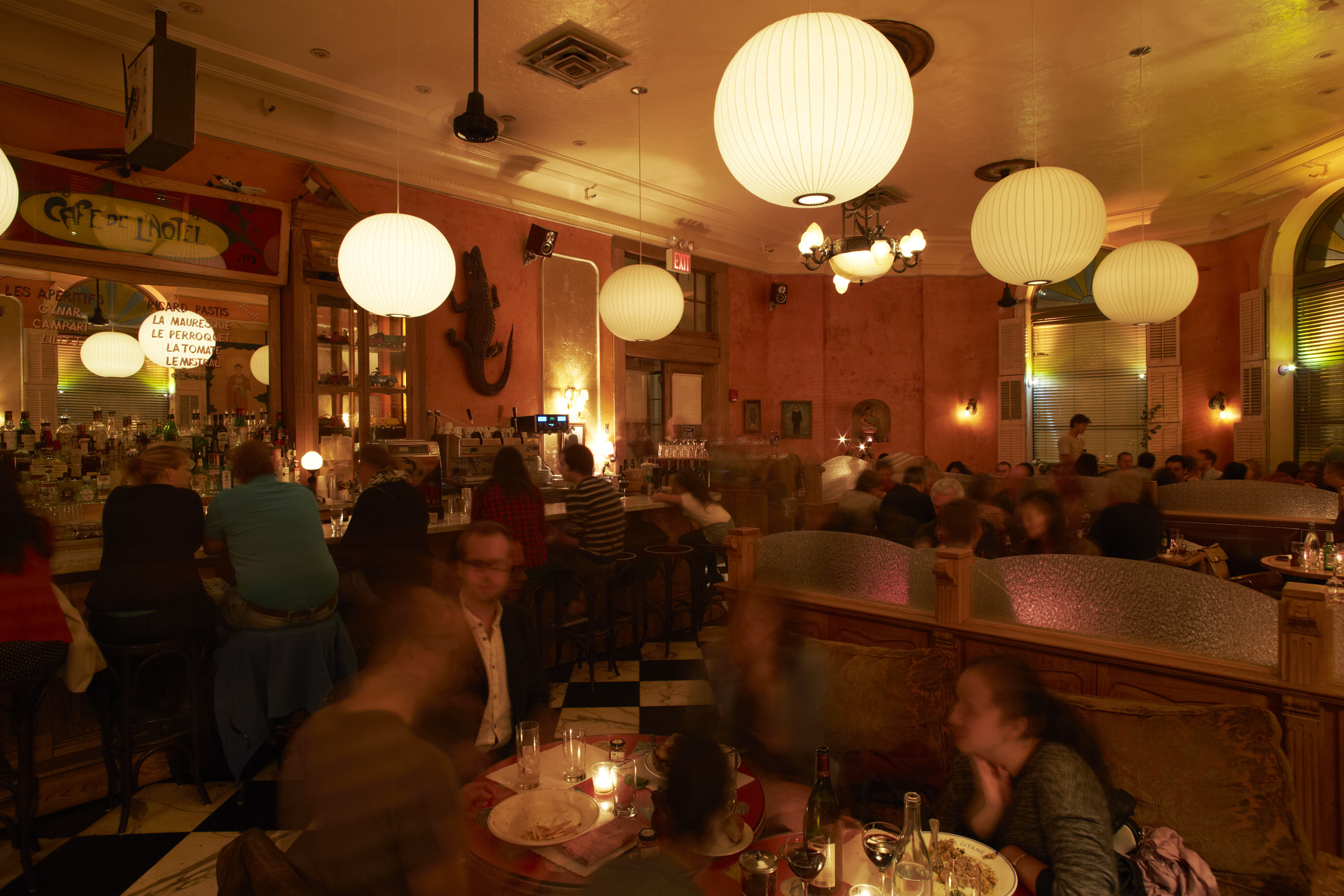 A full room at the Jane.
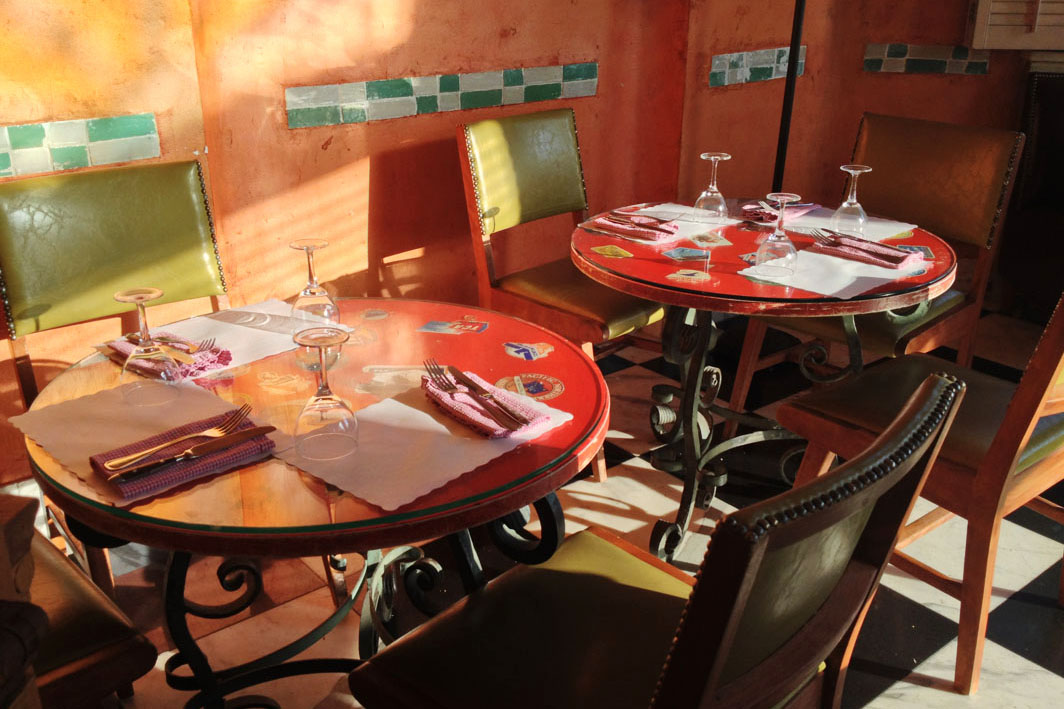 Red tabletops set for service against the green banquettes.
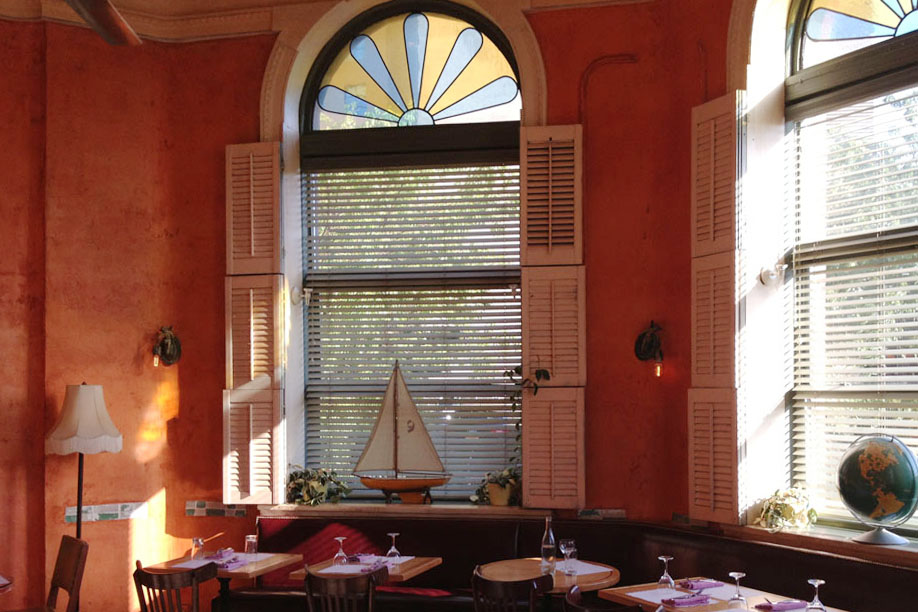 Arched windows, terracotta walls and a model sailboat on the sill.
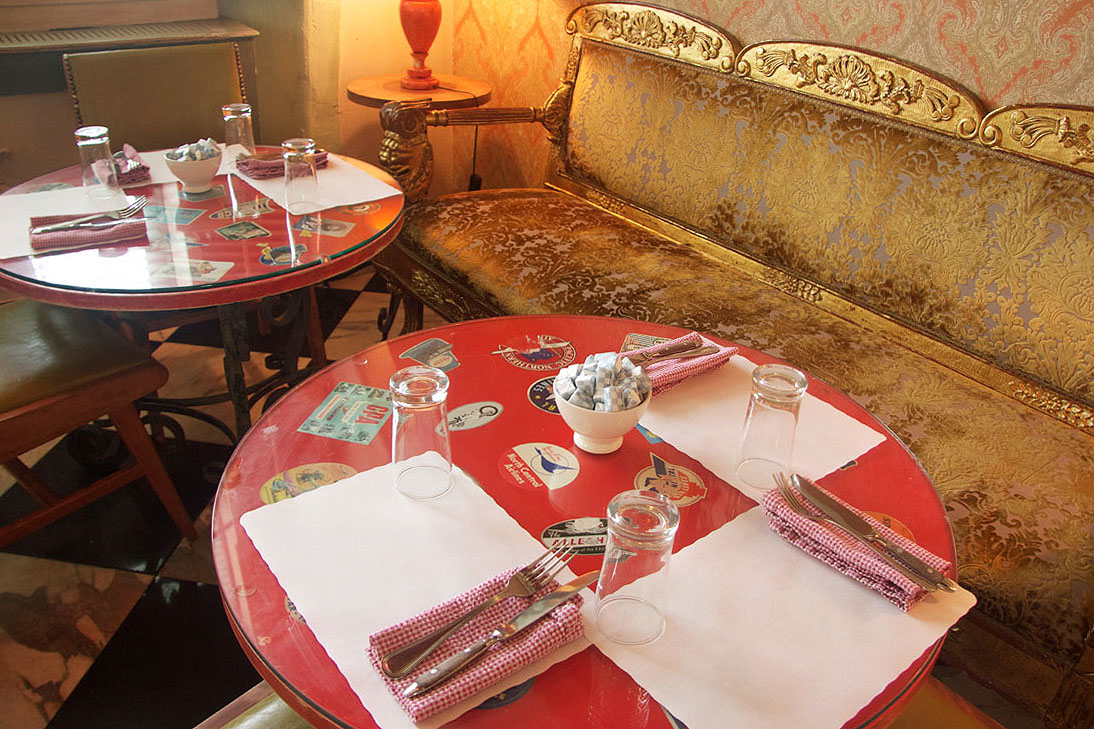 A red table laid up against the gilded banquette.
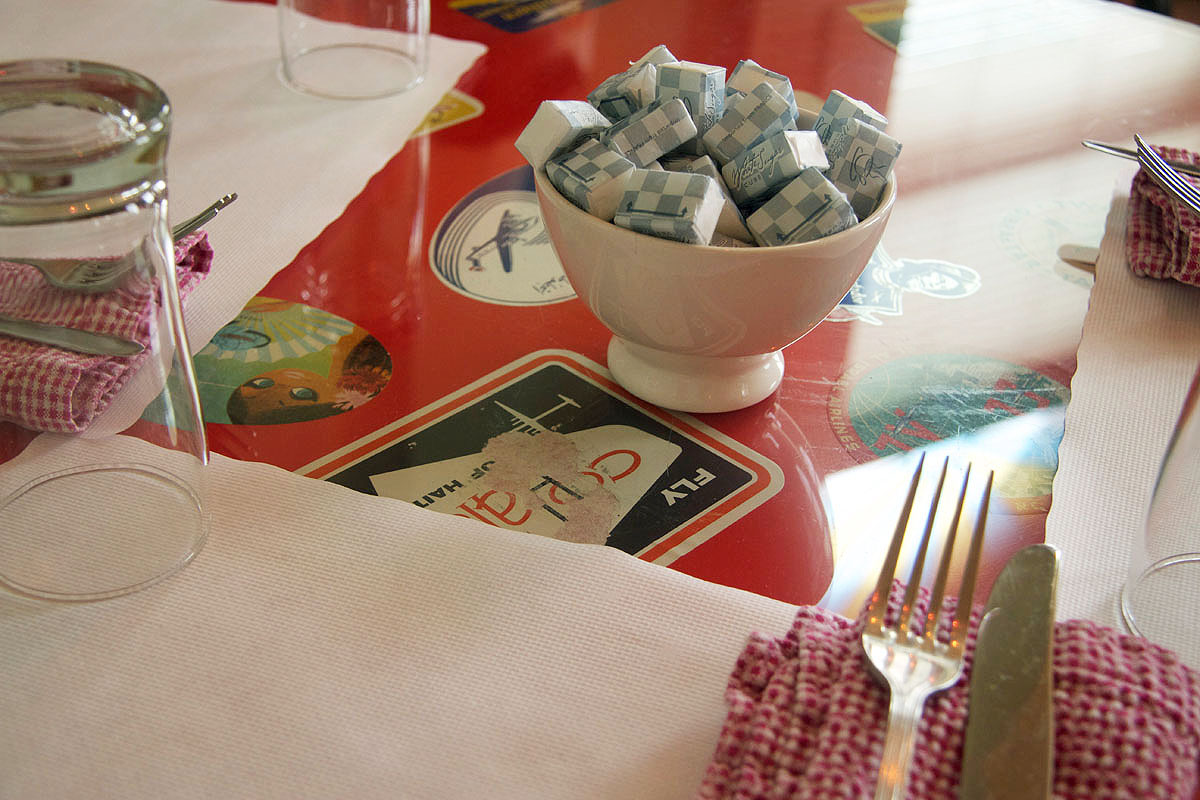 Sugar bowl, checked napkin, red tabletop.
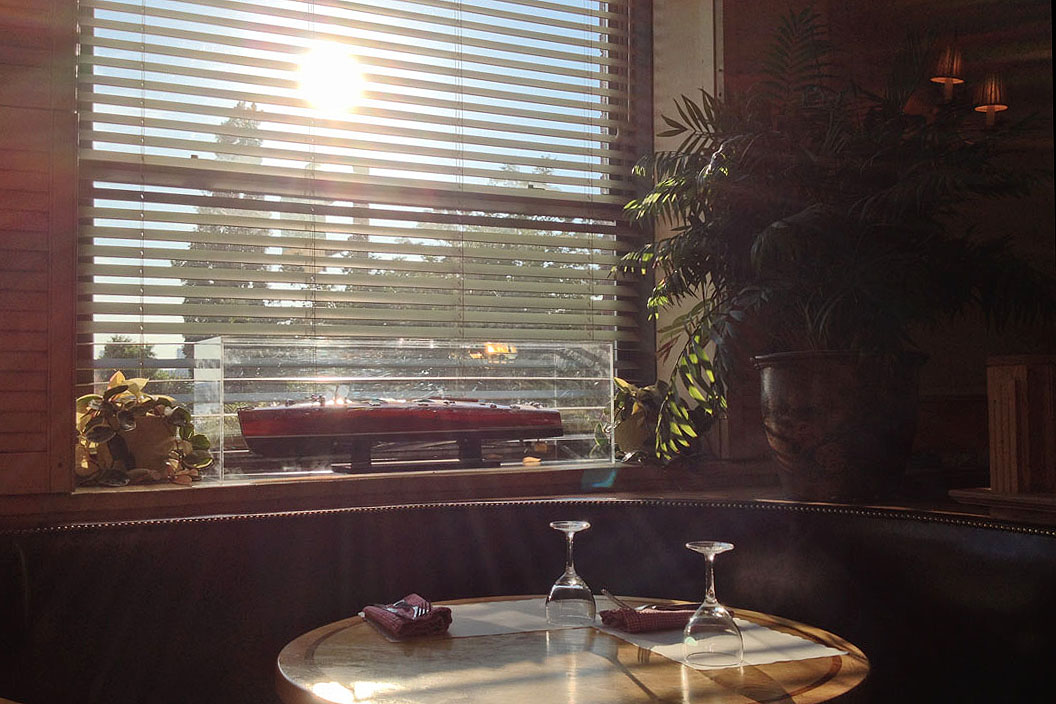 Late light through the blinds.
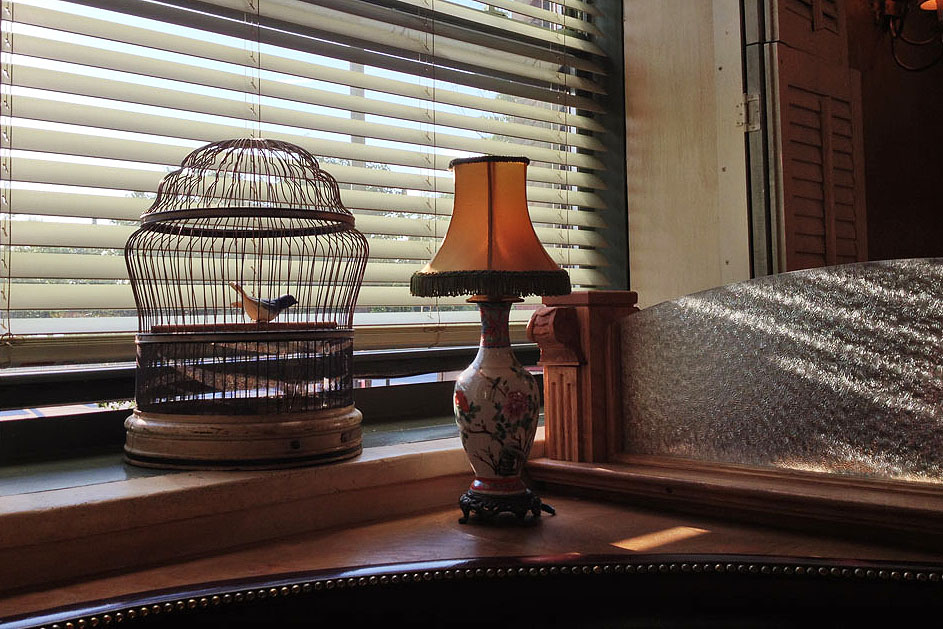 A birdcage and a lamp on the sill — the bric-a-brac approach to decorating a room.
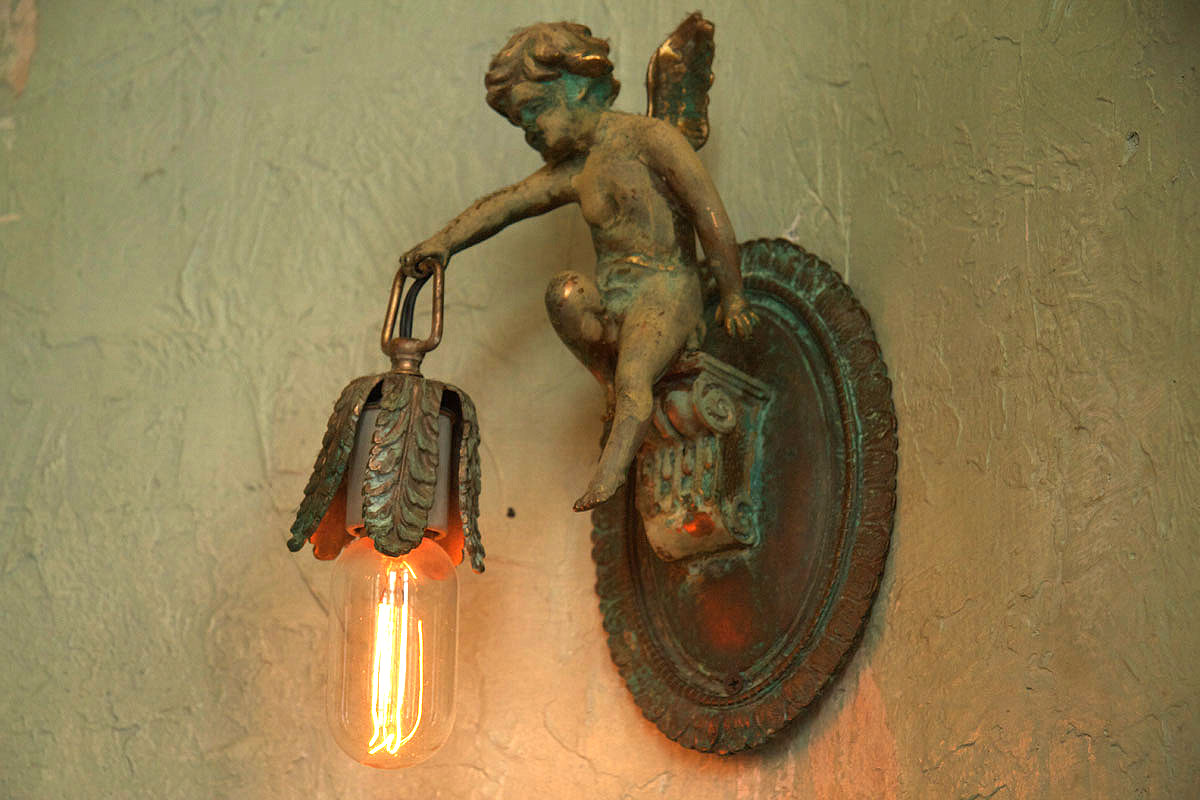 A cherub sconce with an exposed filament bulb.
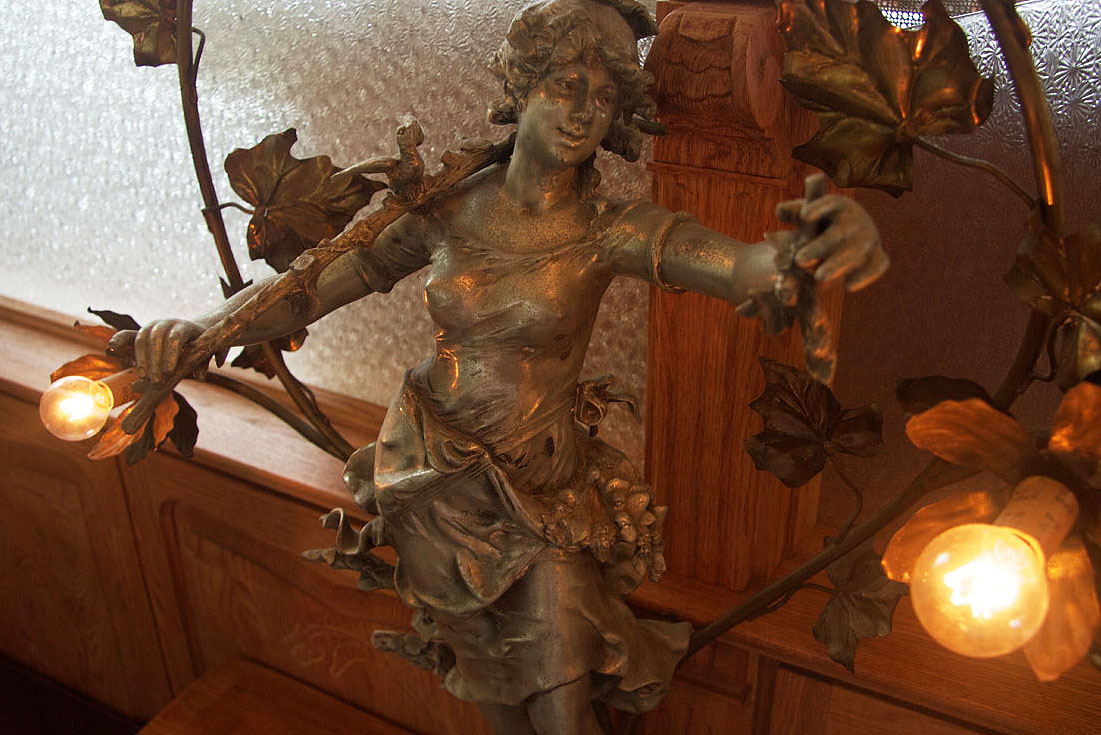 A figural lamp with amber shades.
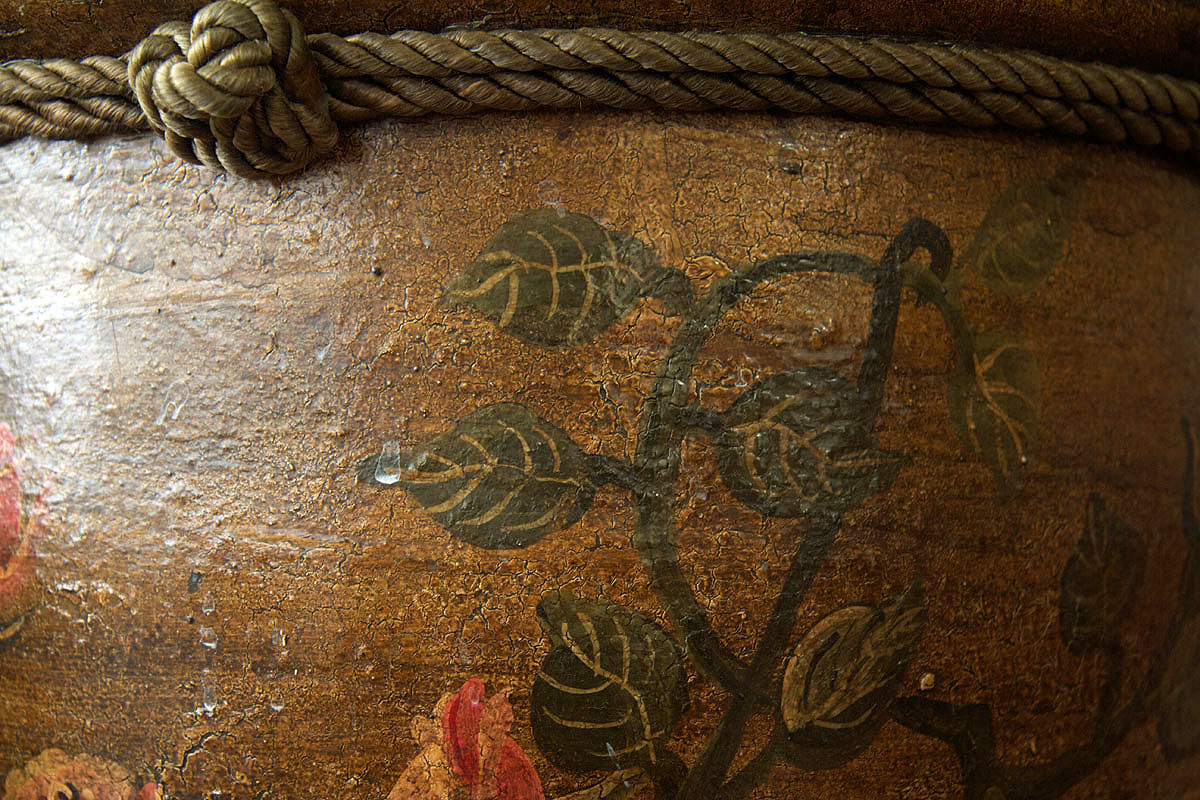 Painted vine detail under a rope trim.
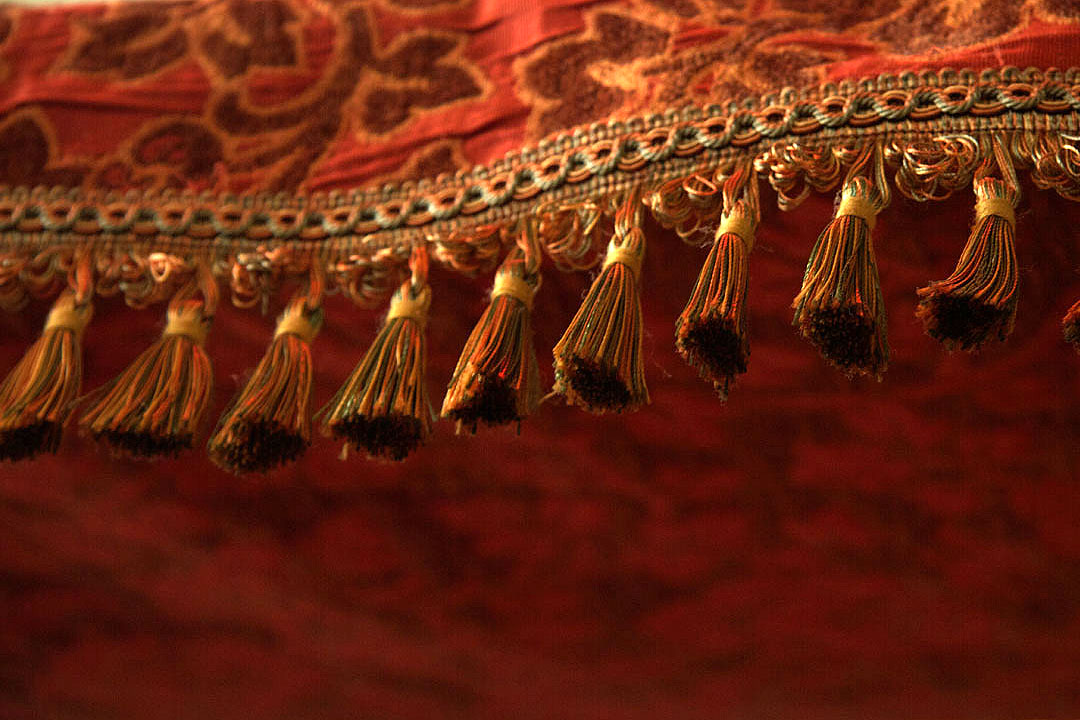 Gold tassels against red — the theatrical register of the Jane room.
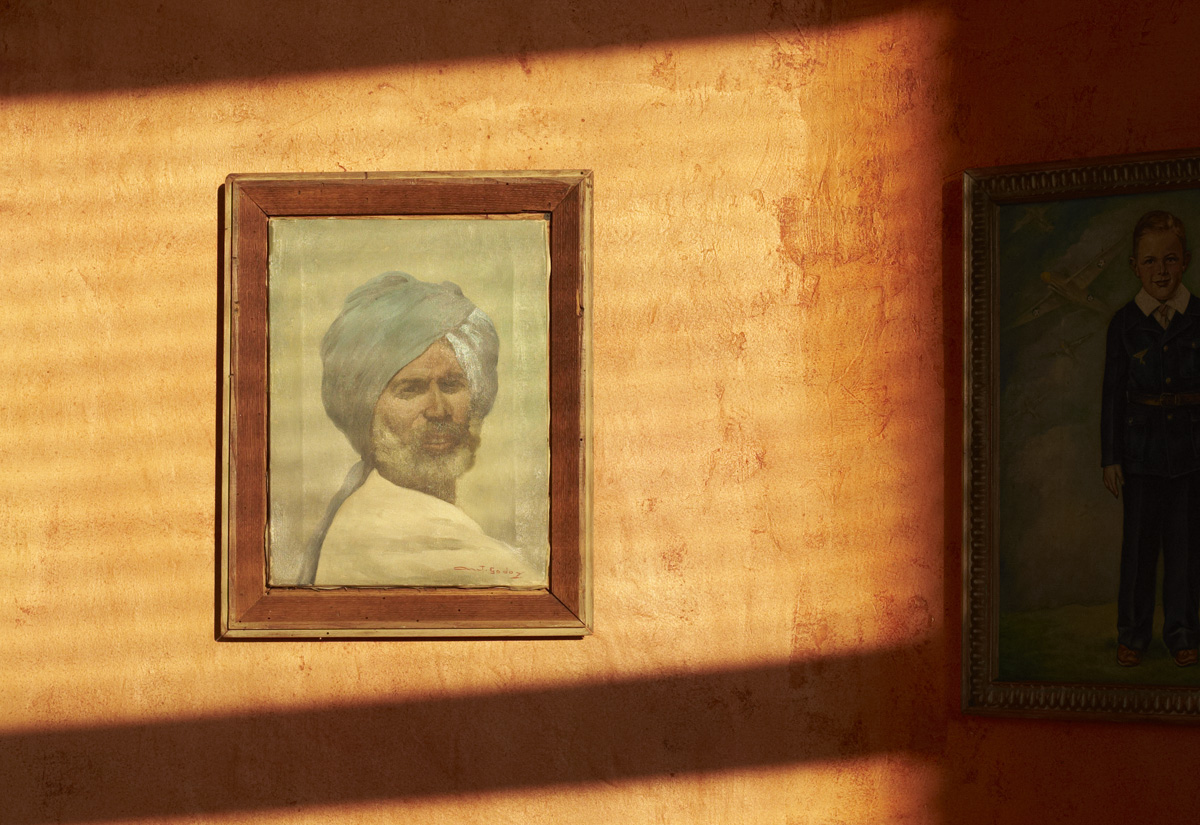 Framed portraits on the ochre wall.
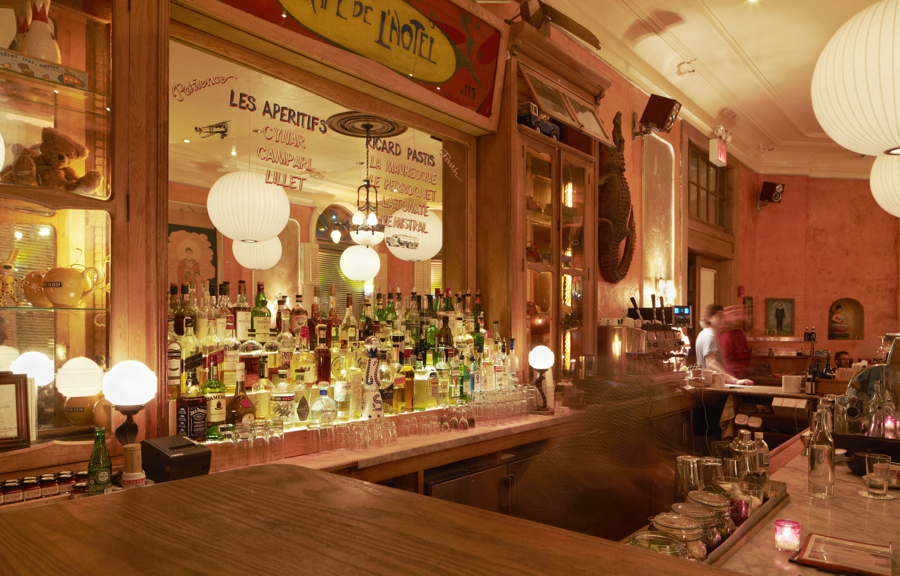 The bar at the Jane Hotel outpost.
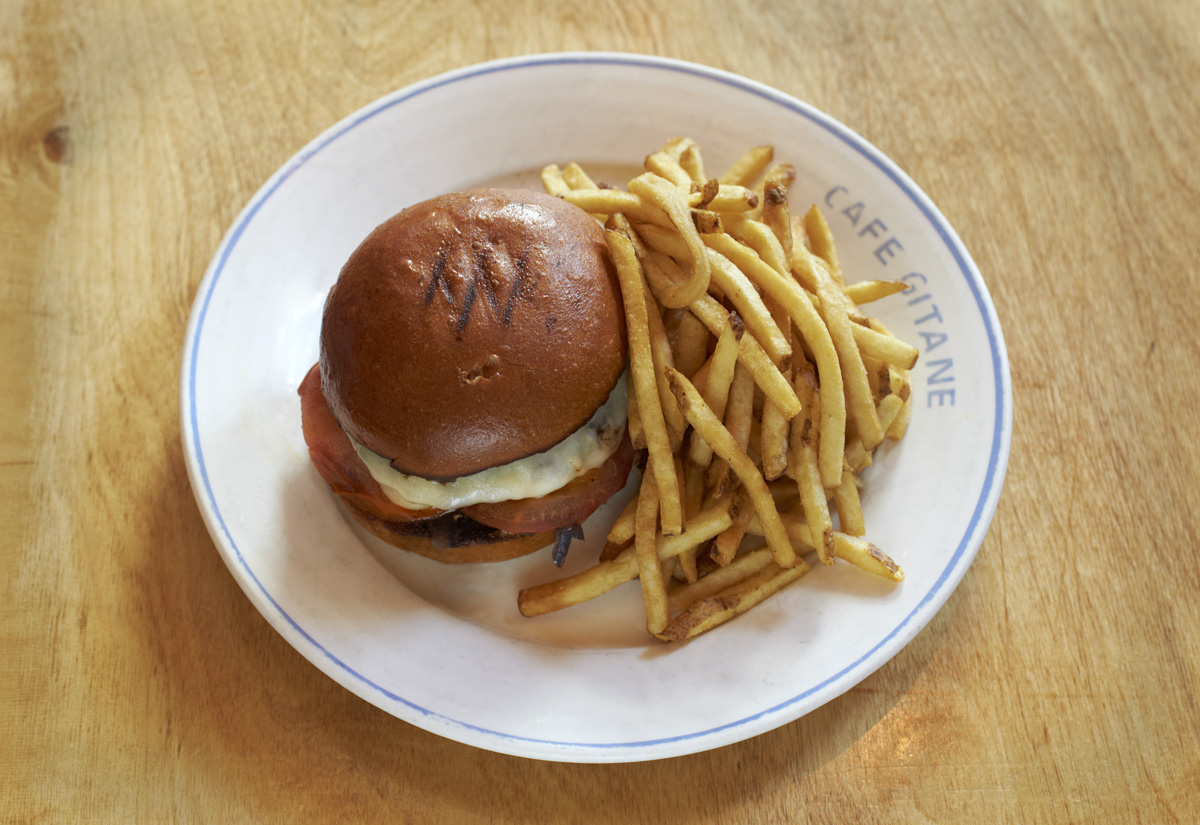 The burger and fries — the most American thing on any Gitane menu.
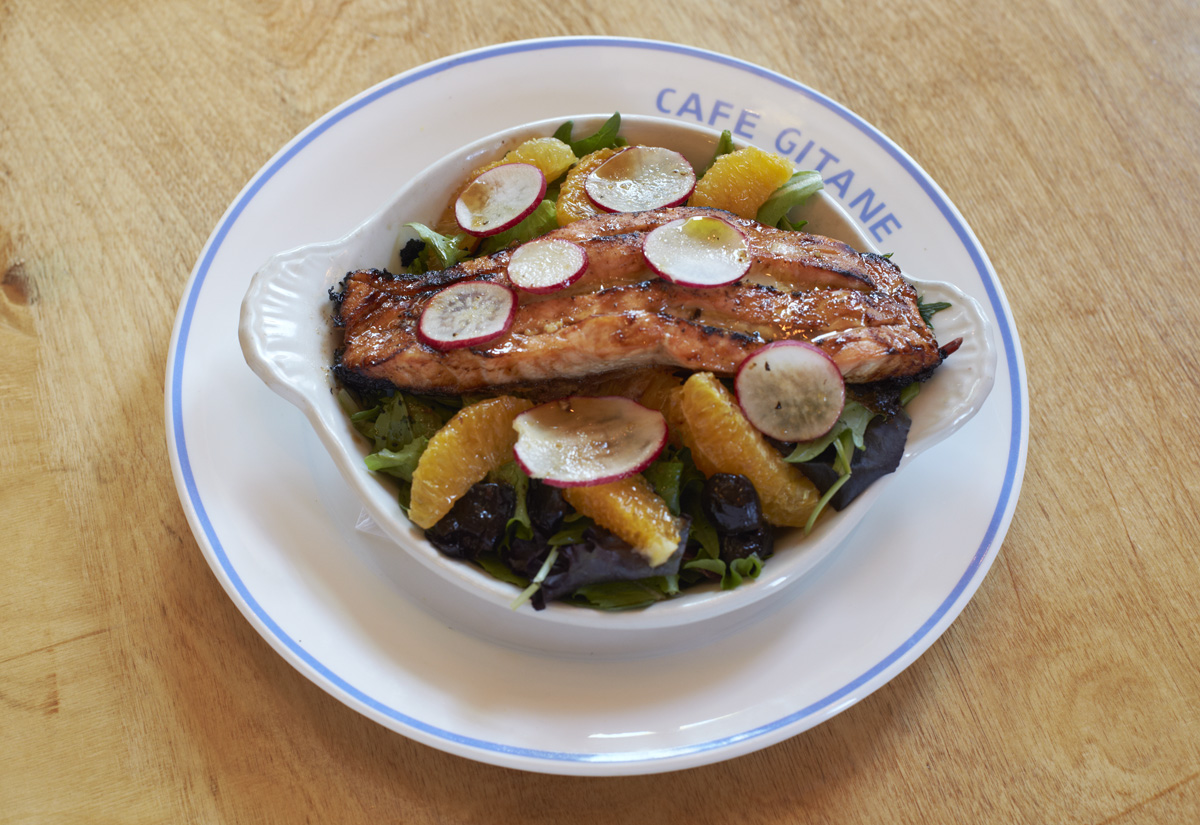 A composed salad with quail eggs and lemon, on the blue-rimmed china.
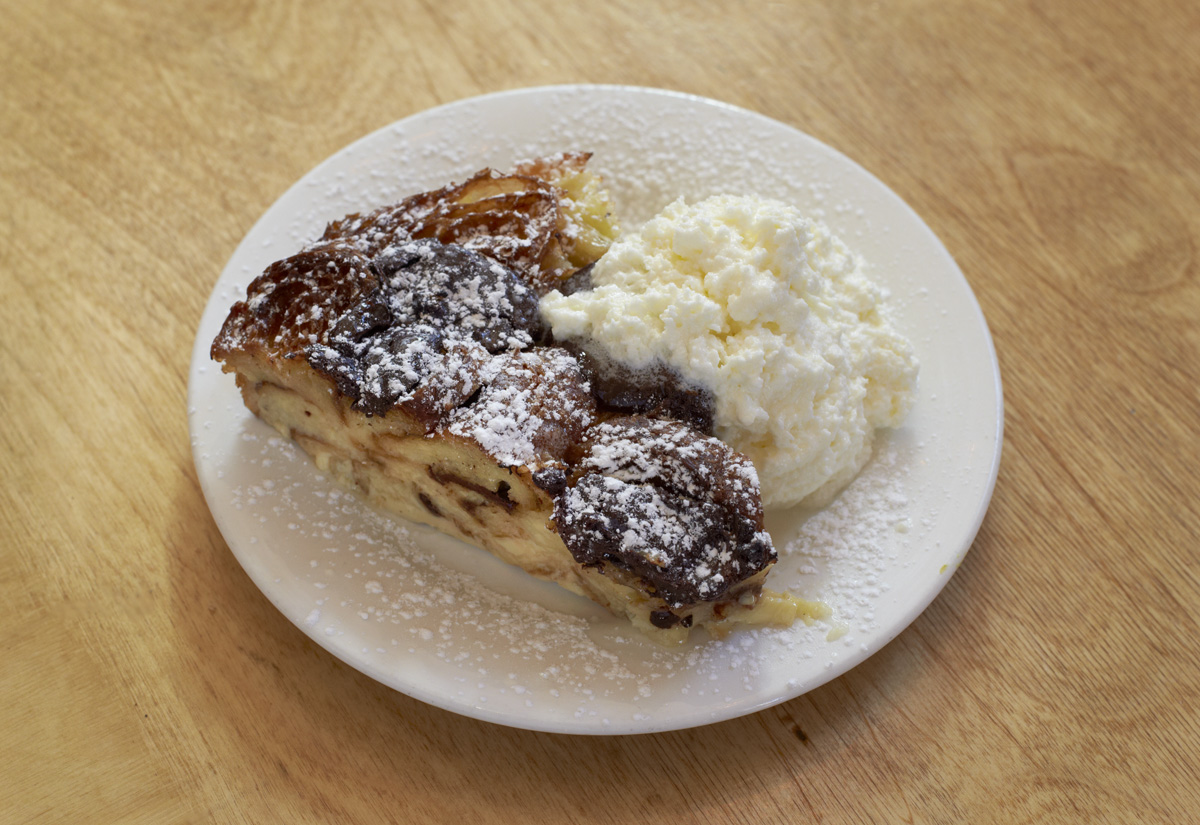 Pastry with icing sugar and cream.
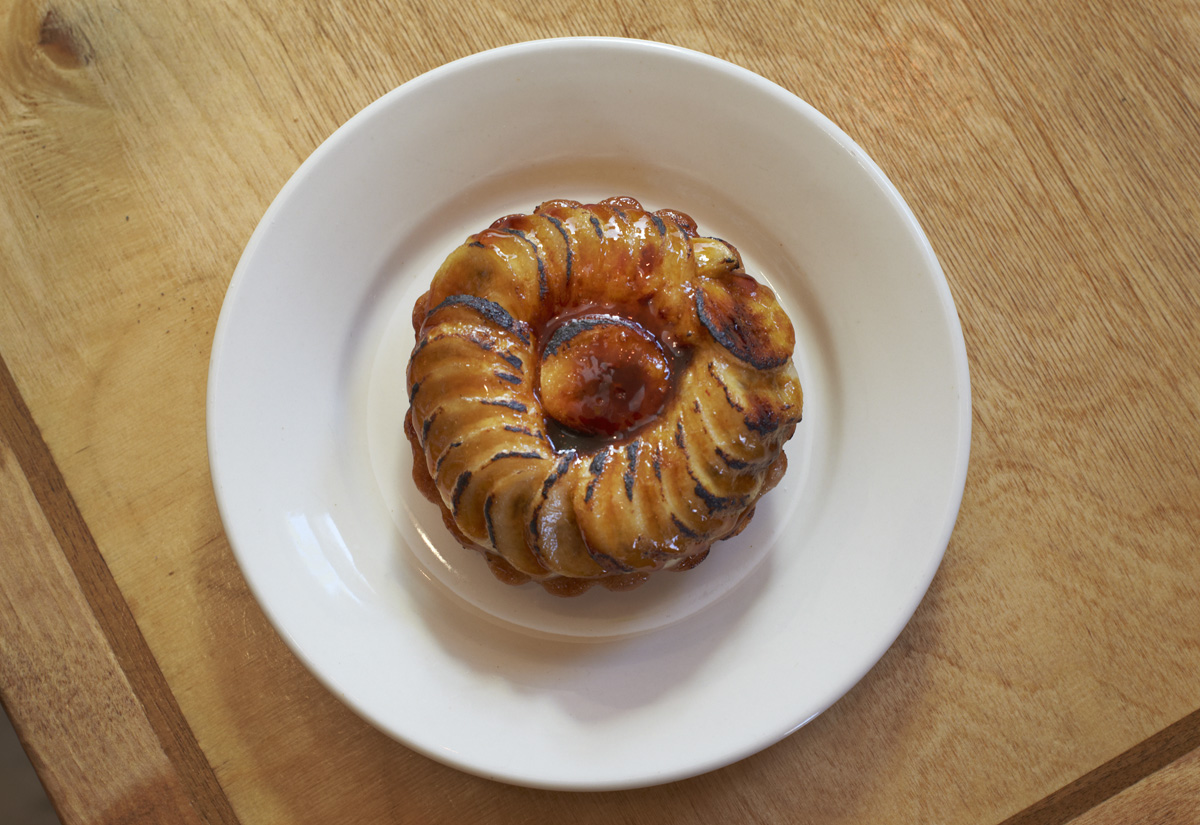 An apple tart, straight out of the French half of the kitchen.