242 Mott Street, Nolita · 1994–2025
Cafe Gitane, Mott St
For thirty-one years, 242 Mott Street held one of the least strategic and most influential rooms in downtown New York. This is what was there, and what happened to it.
Before Nolita had a name
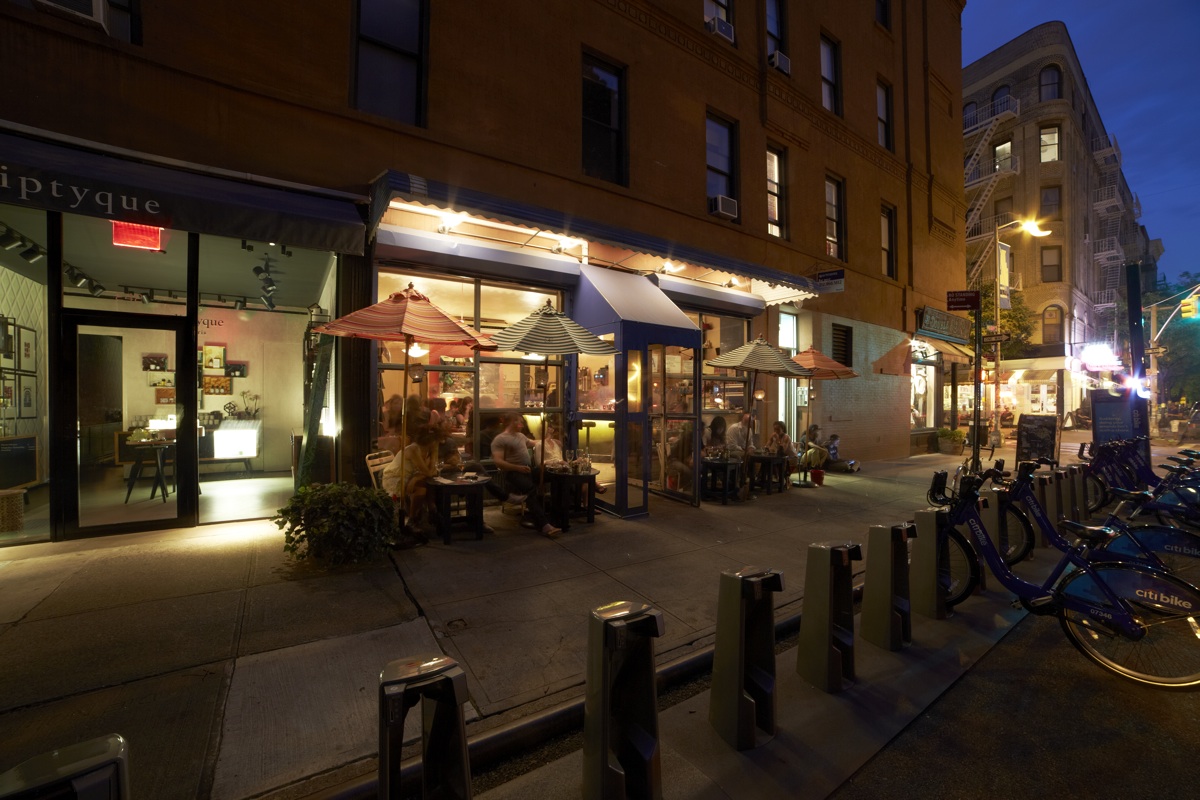
When Luc Lévy signed the lease in 1994, the block did not belong to a neighbourhood anyone could name. It was the northern end of Little Italy: social clubs, older Italian families, a large Puerto Rican community, very little retail and no reason for anyone from uptown to be there. The estate-agent coinage ‘Nolita’ would not stick for another two or three years.
Lévy had grown up in Casablanca and spent years in Paris before coming to New York. He has been consistent in interviews that Cafe Gitane was not modelled on anything. There was no reference cafe, no business plan describing a target customer. He went by feel — what he wanted on the walls, how a room should sit.
The cafe opened in June 1994 to almost no business. Through that summer and into the autumn, hardly anyone came. The most-told story from those first months is the afternoon the room was empty enough that Lévy sent his only waitress home. She was Charlyn Marshall; months later she recorded her first album as Cat Power, at a rehearsal space on the same block used by Sonic Youth and the Beastie Boys.
The write-up that changed everything
In October 1994 the New York Times style section ran a piece on the cafe. The line that stuck described a cafe scene that was not a scene: a room where the atmosphere invited people to stay rather than be seen. The paper described actors nursing a single coffee, old men over a checkerboard, a couple splitting a sandwich. A customer likened it to Saint-Germain.
Lévy's own account of the aftermath is blunt — the cafe was overrun, by every kind of person, more or less immediately. The empty months were over and never returned.
A room assembled by instinct
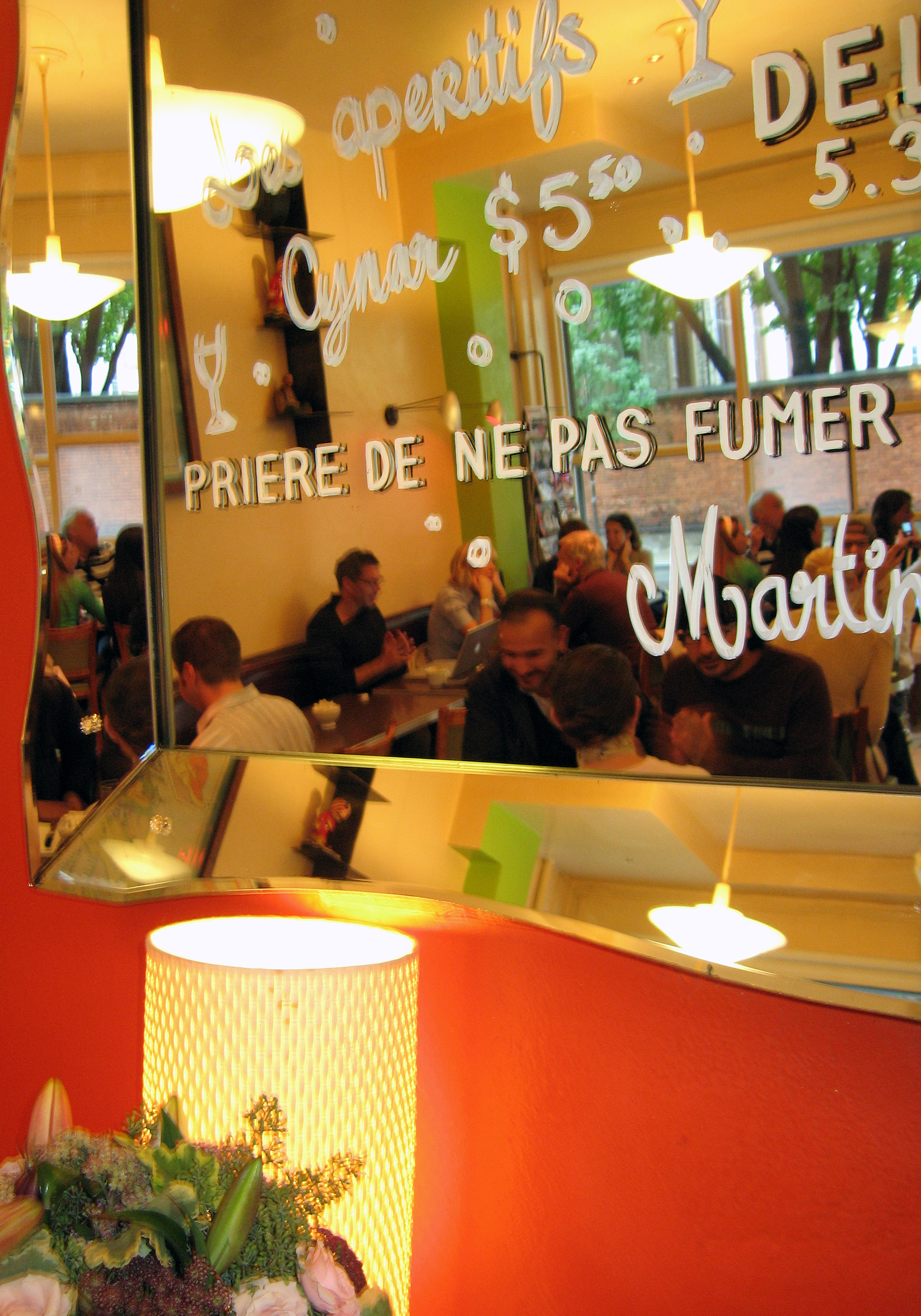
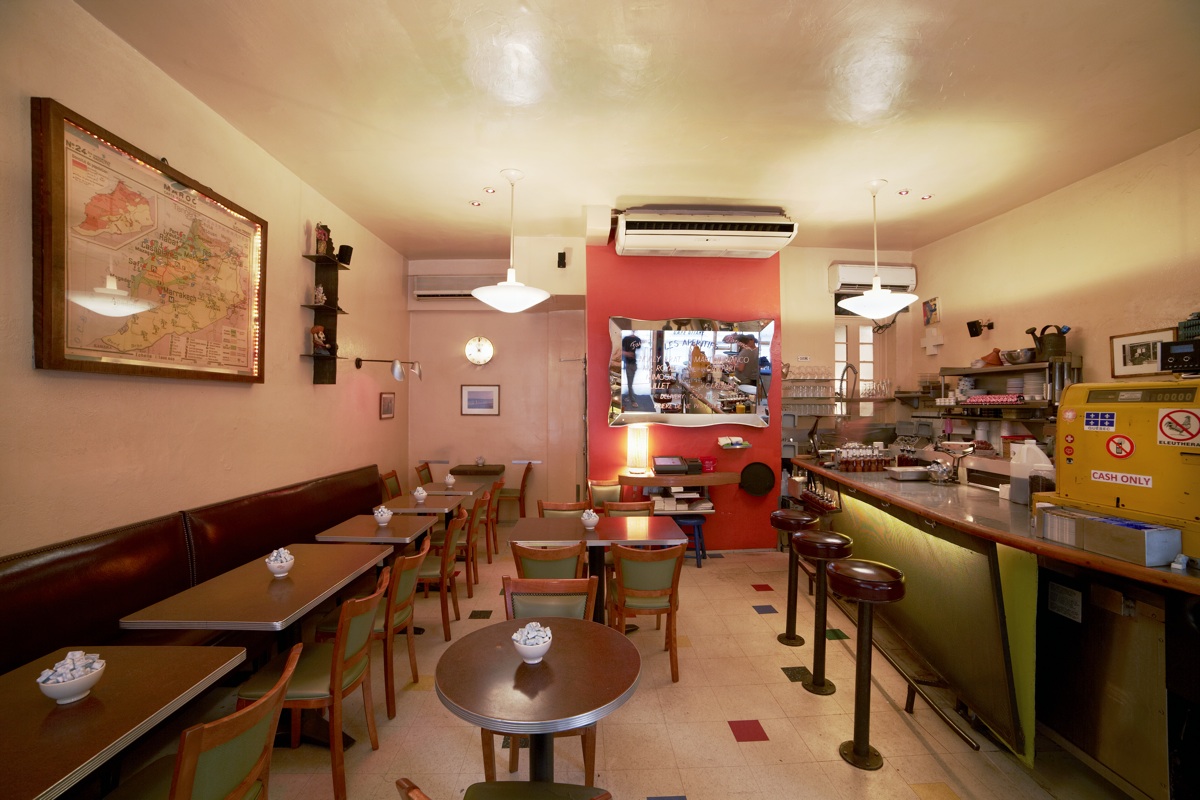
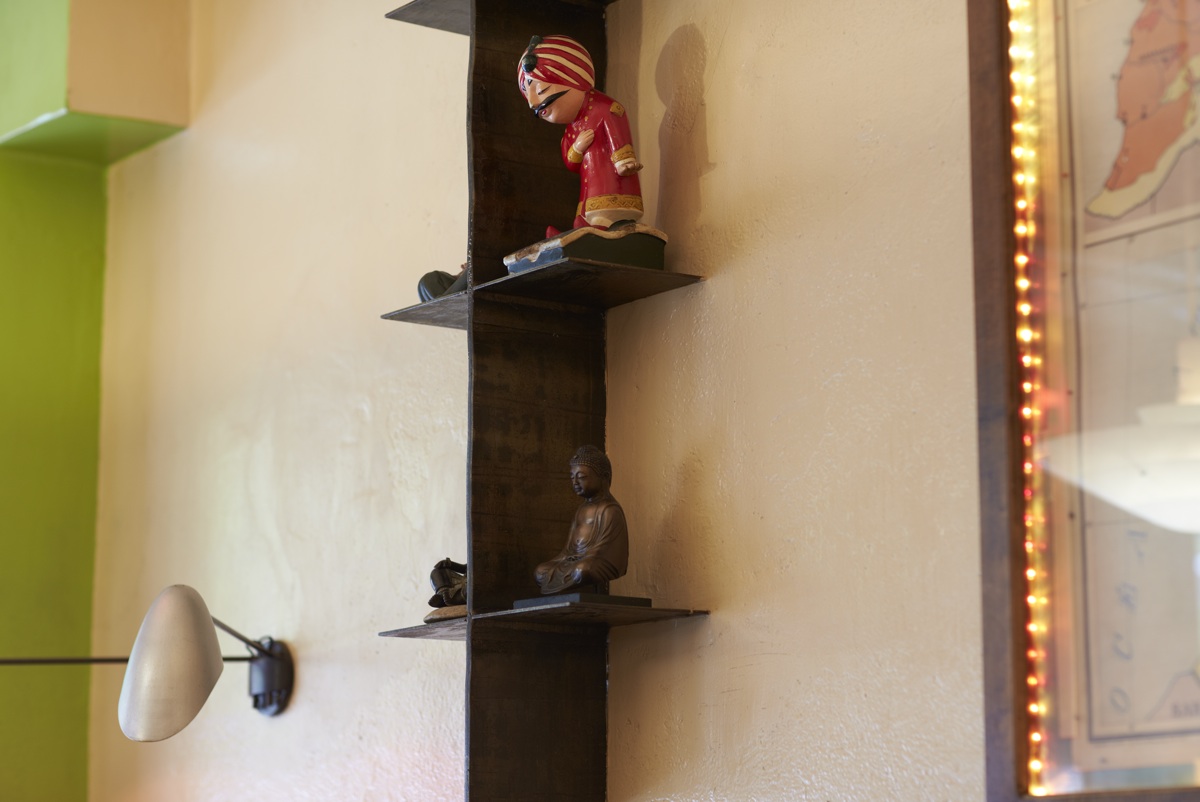
The interior was the point. Ochre and red-orange walls. Dark round tables close enough together to overhear the next one. A long counter with an espresso machine at the centre of it. Framed pictures hung in arrangements that followed no scheme. A hand-lettered prière de ne pas fumer sign. The waitresses wore a small green dress that the anniversary book devotes a whole chapter to.
Nothing was refreshed on a cycle. Thirty years on, photographs from 2020 and photographs from the late nineties are hard to tell apart. In a neighbourhood that renovated itself every eighteen months, standing still became the most distinctive thing the cafe did.
The regulars
The list is genuinely improbable, and it is well documented in the 30th-anniversary book. David Bowie was fond enough of the couscous to order it to his apartment. Spike Jonze, Michelle Williams, Norman Reedus and Helena Christensen were among the regulars. Albert Hammond Jr. of the Strokes courted a waitress there and eventually married her. Fashion photographers, art directors, gallerists and a local parish priest all show up in the book's interviews.
The reason usually given is that nobody was watching in a way that mattered. The cafe was small, unbranded, cash-friendly and indifferent. You could sit for three hours. That is a rare commodity in Manhattan and it kept people coming for three decades.
A timeline of Cafe Gitane on Mott St
- June 1994
The cafe opens
Luc Lévy opens Cafe Gitane at 242 Mott Street. The block is still Little Italy; the name Nolita does not yet exist. Business is slow enough through the summer that he sends his only waitress — Charlyn Marshall, shortly to record as Cat Power — home early.
- October 1994
The New York Times notices
A style-section piece describes a cafe scene that isn't a scene. The room fills immediately and stays full.
- Late 1990s
Nolita gets its name
The neighbourhood designation takes hold. The cafe becomes the default downtown meeting point and an unofficial living room for the fashion, film and music crowd.
- Mid 1990s
Avocado toast appears
Mashed avocado on grilled bread with lemon and chilli flakes goes on the menu as a cafe snack — widely reported as the first served in New York.
- 2010s
The cafe expands
A West Village outpost opens inside the Jane Hotel at 113 Jane Street, running the same menu in a far more ornate room. It later closes.
- August 2017
Tokyo opens
A branch opens in Ebisu, Tokyo, bringing the avocado toast and salmon tartare to a room with high ceilings and a large terrace.
- August 2018
Brooklyn opens
A ten-table cafe opens at 70 Hudson Avenue in Vinegar Hill, next to Vinegar Hill House, with a shorter brunch-weighted menu.
- November 2024
The 30th-anniversary book
McNally Editions publishes Cafe Gitane: 30 Years by then-general-manager Isobel Lola Brown — an oral history of the cafe and, by extension, of Nolita.
- December 2025
Mott Street closes
The windows are boarded up without warning after thirty-one years. No announcement is made. The official website goes offline.
The closure
The end came without warning in December 2025. The space was boarded up; no notice appeared on the door or on the cafe's social accounts. Eater followed up and confirmed the closure through staff at the Vinegar Hill location. The official website went offline. Lévy, who had spoken freely about the cafe a year earlier during the book's publicity, said nothing.
Reporting at the time noted that the business had been under pressure behind the scenes despite the renewed attention. Nolita by 2025 was a high-rent retail corridor, and a cafe whose entire model depended on people occupying a table for hours over a coffee is a difficult business to run on that kind of rent.
If you are trying to reach the restaurant: the phone numbers that circulated for 242 Mott Street are no longer in service for that location, and neither this site nor the closed original can take bookings. The Vinegar Hill cafe in Brooklyn is still operating and is a separate room with its own contact details.
What it leaves behind
Two things, mostly. The first is a neighbourhood: it is not really arguable that Cafe Gitane helped make Nolita a place people went to rather than a phrase on a listing. The second is on almost every brunch menu in the English-speaking world. Avocado toast became a cultural punchline, a housing-market metaphor and a genuinely global default breakfast, and the version that started it was served on this block, unceremoniously, as a snack to go with coffee.
Continue with the dishes the kitchen was known for, the photo archive, or the full account of the closure.