Food history
The avocado toast started here
How a cheap snack on a Nolita cafe menu became a global breakfast, a housing-market metaphor and a punchline.
28 January 2026 · Cafe Gitane Archive
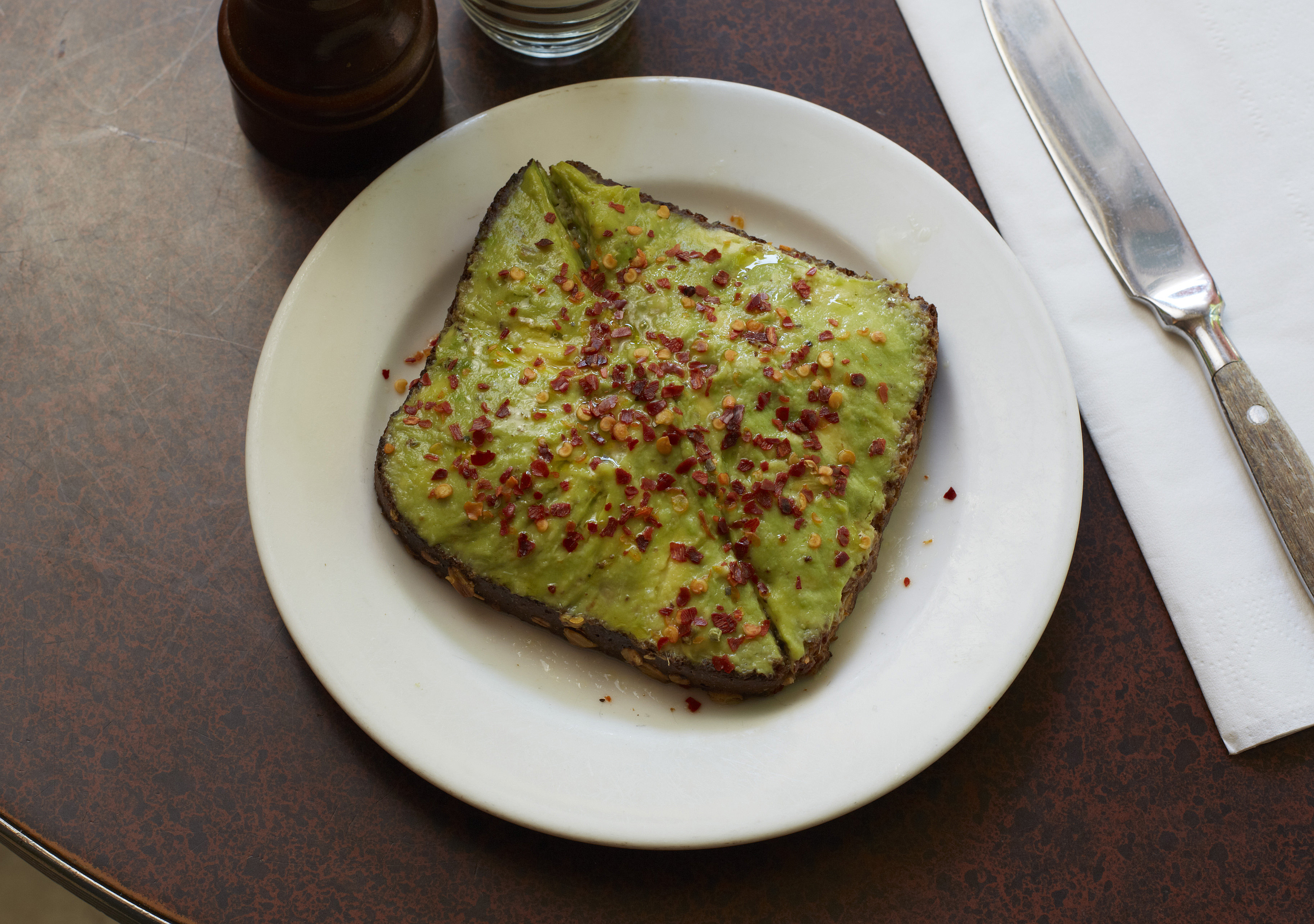
Mashed avocado on grilled bread, with lemon, olive oil and red chilli flakes. That is it. That is the dish that Cafe Gitane put on a Nolita menu in the mid-nineties, and that thirty years later became so ubiquitous it turned into shorthand for an entire generation's spending habits.
The claim, stated carefully
Cafe Gitane is widely reported as the first restaurant in New York to serve avocado toast. It is worth being precise about what that does and does not mean.
It does not mean anyone invented putting avocado on bread. People have been doing that for as long as both have existed, in Mexico most of all, and in Australian cafes through the nineties in parallel. What the claim means is narrower and more interesting: this is where it first appeared as a named menu item in a New York restaurant, and this is the version — lemon, chilli flakes, grilled bread, no egg — that the rest of the city copied.
The anniversary book, Cafe Gitane: 30 Years, devotes a chapter to it and prints the recipe. Eater once described the place as a fashionable toast specialist, which is both accurate and slightly cruel.
The version they actually served
Reconstructed from the published recipe and from three decades of people describing it: good sourdough or country bread, grilled rather than toasted. Ripe avocado mashed roughly — not smooth, not sliced and fanned. Lemon juice, a solid amount. Olive oil. Salt. Red chilli flakes across the top.
How it became a punchline
The trajectory is well documented and mostly took place far from Mott Street. Through the 2000s it spread across Australian and then British cafe culture. By the mid-2010s it was on essentially every brunch menu in the English-speaking world, at a price wildly disconnected from its ingredient cost. In 2017 an Australian property developer suggested young people could not afford homes because they were spending on smashed avocado, and the dish stopped being food and became an argument.
None of that had anything to do with the cafe. Cafe Gitane spent the whole period serving the same plain version to the same neighbourhood at a not-outrageous price, which is a fairly good summary of the cafe generally.
Making the Mott Street version at home
The recipe is printed in Cafe Gitane: 30 Years, and the version below is a reconstruction from that and from three decades of people describing it. It is deliberately plain. Resist the urge to add things.
The bread. Country sourdough, cut thick, grilled rather than toasted — a dry pan or a griddle, so you get char rather than uniform browning. This is the single biggest difference between the original and most imitations, which use a pop-up toaster and end up with something crisp all the way through instead of crisp outside and chewy inside.
The avocado. Ripe, mashed roughly with a fork. Not blended, not sliced and fanned. You want texture and visible lumps. Mash it in a bowl rather than on the bread so you can season it properly.
The seasoning. Lemon juice, and more than feels right — this is what stops the whole thing tasting flat. Good olive oil. Salt. Then red chilli flakes scattered across the top, which is the visual signature as much as the flavour one.
What is not on it. No poached egg. No feta, no radish, no everything-bagel seasoning, no microgreens, no balsamic reduction, no za'atar. The dish that conquered the world had almost nothing on it, and the additions that came later are mostly a way of justifying a higher price.
The economics that made it spread
It is worth being specific about why this particular dish, rather than any other on the menu, ended up everywhere. Three properties, none of them about taste:
- No cooking station. A toaster and a fork. No grill, no fryer, no extra prep cook. Any cafe with an espresso machine could add it to the menu on a Monday.
- Very high margin. The ingredient cost is bread, an avocado, a lemon and oil. Priced as a light meal rather than a snack, it became one of the most profitable items a cafe could sell.
- It photographs. Bright green on white on dark wood. From about 2010 onward that mattered enormously, and Gitane's room was full of photographers and art directors a full fifteen years before that.
By the mid-2010s it was on essentially every brunch menu in the English-speaking world. In 2017 an Australian property developer suggested young people could not afford homes because of their spending on smashed avocado, and the dish stopped being food and became an argument about a generation. None of that had anything to do with the cafe, which spent the whole period serving the same plain version to the same neighbourhood at a not-outrageous price.
Where to eat it now
The Mott Street original is closed. The Vinegar Hill cafe in Brooklyn still serves it and it is still the same dish. So does the Tokyo branch in Ebisu, where it arrives as part of a lunch set with soup and salad for a price that would have made a Nolita regular weep.