The regulars
Cat Power was the first waitress, and other improbable facts
David Bowie's couscous deliveries, a Strokes courtship, and a cafe whose staff list reads like a downtown who's-who.
25 February 2026 · Cafe Gitane Archive
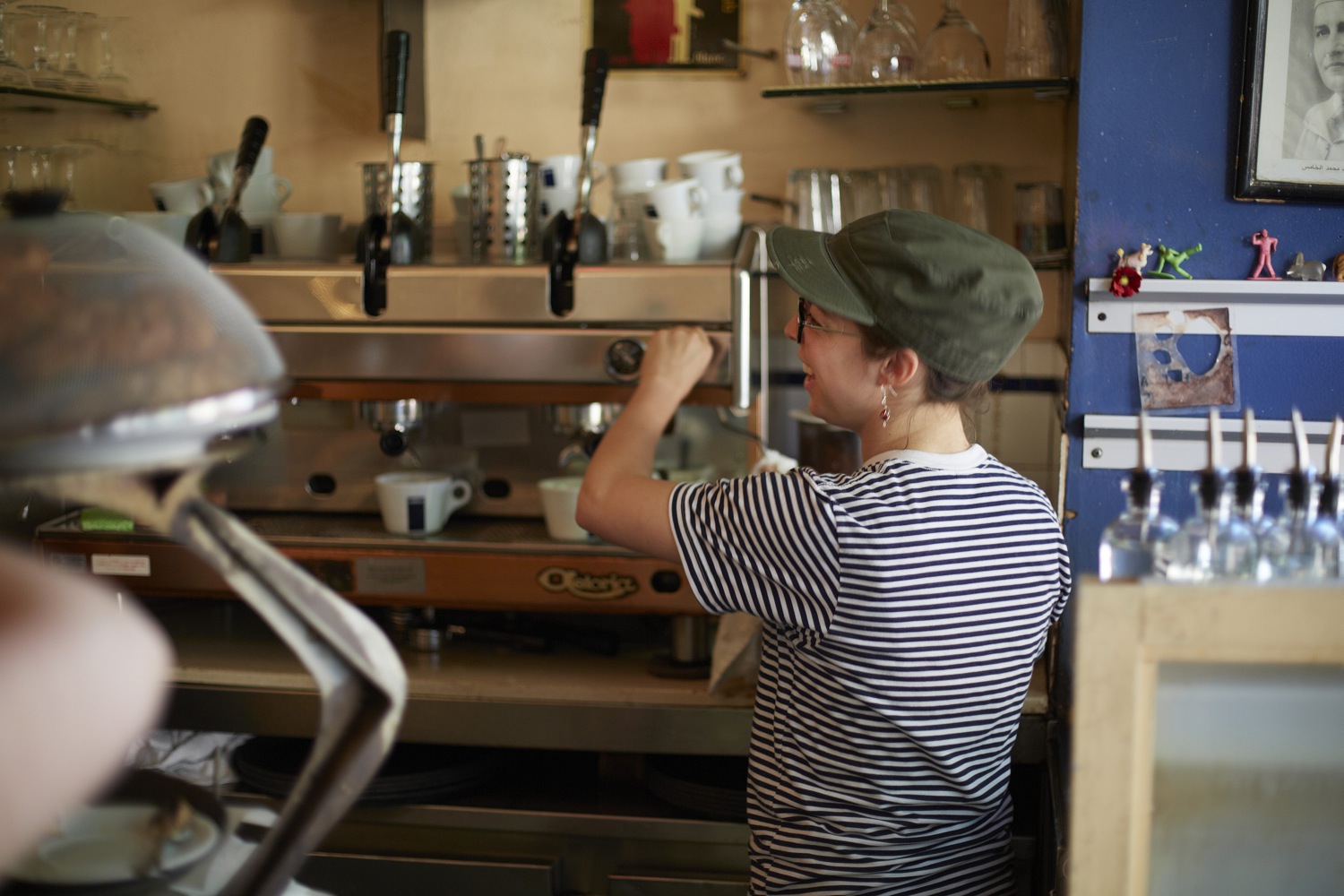
Every long-running restaurant collects stories. Cafe Gitane collected a set so improbable that the 30th-anniversary book essentially functions as an oral history of downtown New York with a cafe in the middle of it.
The waitress who was sent home
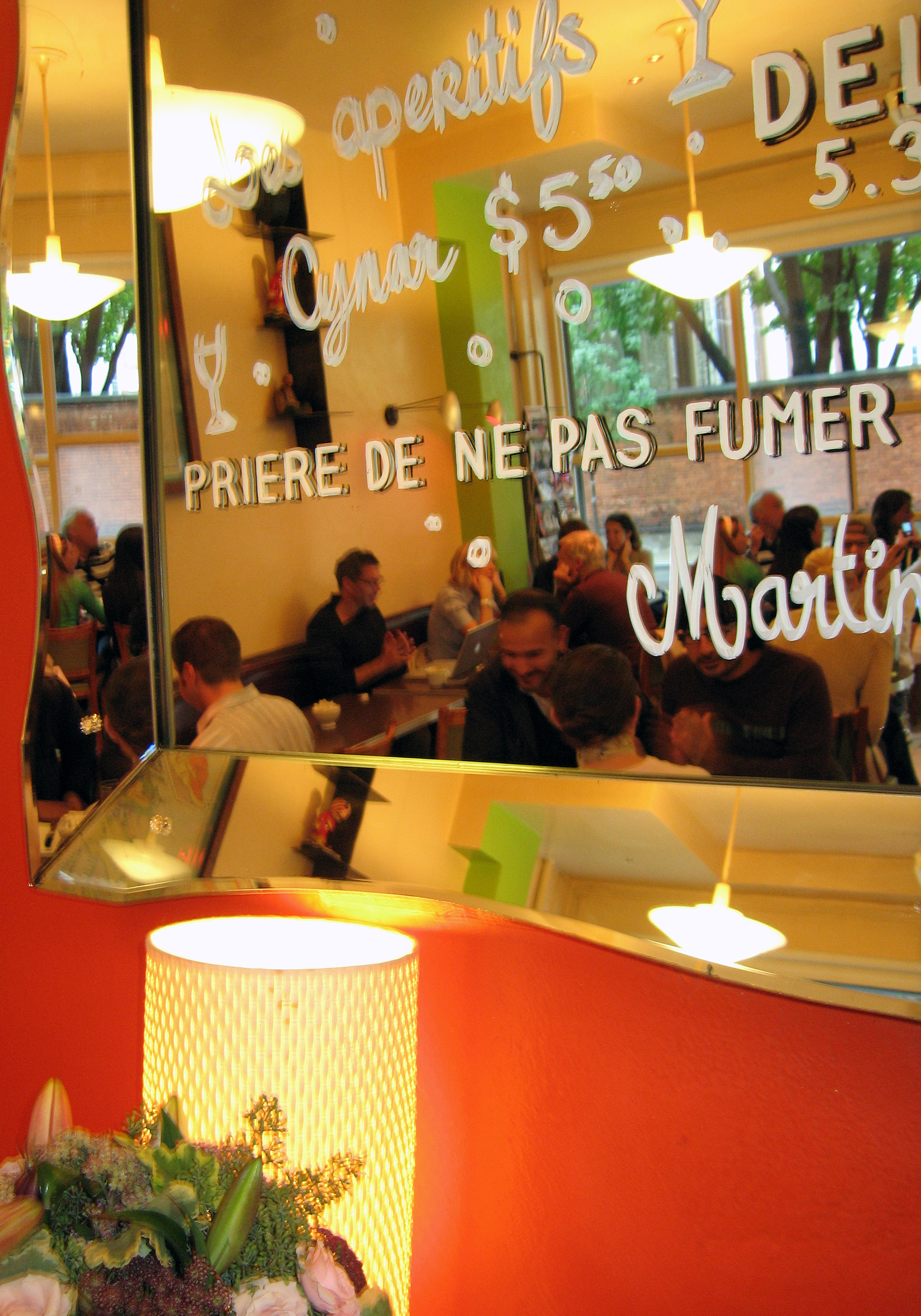
The founding anecdote is the best one. June 1994, the cafe has just opened, and nobody is coming in. On one particularly dead afternoon Luc Lévy tells his only waitress there is no point in her staying and sends her home.
The waitress was Charlyn Marshall. Within months she recorded her first album under the name Cat Power, at a rehearsal space up the same block that was shared by Sonic Youth and the Beastie Boys.
What makes the story land is not the coincidence. It is the density it implies. On one block, in one year, an empty cafe and a rehearsal room that would produce a significant part of nineties American independent music. That is what downtown was, and the reason the cafe ended up as a clubhouse is that it happened to open in the middle of it.
Bowie and the couscous
David Bowie lived downtown for years and was a regular. The detail preserved in the anniversary material is that he liked the couscous enough to have it delivered to his apartment — which is a very good measure of a dish, and a fairly good measure of a neighbourhood, since it implies he considered the cafe local.
The rest of the room
Spike Jonze. Michelle Williams. Norman Reedus, who sat for an interview in the book. Helena Christensen, who has said publicly that she thought the place stayed as cool as it ever was. The photographer Inez van Lamsweerde and the director Glen Luchford both appear in the book's conversations. Restaurateurs Serge Becker and Zac Bahaj, later of Lucien, were regulars long before they were names anyone outside the industry would recognise.
And Albert Hammond Jr. of the Strokes, who met a waitress at the cafe and eventually married her — which the book files, correctly, under the general heading of things that could only have happened in an analogue New York where people met each other in rooms.
Why they all went there
The consistent explanation from everyone interviewed is that nobody was watching in a way that cost anything. The cafe was small, unbranded and indifferent to status. There was no door policy because there was no door worth policing. You could sit for three hours over one coffee and no one would clear your table.
That is an unusual commodity in Manhattan and it becomes more valuable the more famous you are. A room where a well-known person can be ordinary is worth a great deal, and the way you build one is precisely by not trying.
The green dress, and the shift
The anniversary book devotes a full chapter to the little green dress the waitresses wore, which sounds like a footnote and is not. A uniform in a room like that does a specific job: it marks who works there in a space where the customers are frequently more famous than the staff, and it does so without the apparatus of a formal restaurant. It was also, by every account, genuinely covetable — the kind of detail that ends up in fashion editorials because the people in the room worked in fashion.
There is a companion chapter on the blue workwear jacket, and another that follows a single shift with five of the waitresses. Those pages are the most useful thing in the book, because they describe the actual mechanics of the place: who arrived when, how the room turned over, what the regulars ordered without asking.
Collaborations, and what they say about the room
For a cafe that never advertised, Gitane ended up in a surprising number of other people's projects. The book has chapters on collaborations with Supreme, with Le Labo, and on the relationship with Balthazar up the road. One restaurateur interviewed admits he felt so at home at Lévy's place that he dreaded his own restaurant opening, because it would put an end to his daily visits.
The pattern in all of these is the same. Brands did not come to Gitane because it had a large following; it did not. They came because the room signified something specific about downtown New York that money cannot manufacture, and a thirty-year-old cafe with peeling paint and a hand-lettered no-smoking sign had it by default.
The people who actually ran it
The book is at its best when it turns away from the famous names. It includes a chapter following a single shift with five waitresses. It devotes space to the small green dress that staff wore. It interviews the parish priest from the neighbouring church. It has a chapter on Balthazar's relationship with the cafe, and one restaurateur admitting he had felt so at home at Lévy's place that he dreaded his own restaurant opening because it would end his daily visits.
Those are the pages that explain the thirty-one years. Celebrities pass through. A cafe survives on the people who work in it and the people who come every week, and when the windows were boarded up in December 2025 it was mostly those people who lost something.